
Indonesia Crypto Users Growth Hits 20M Amid Trading Decline
Indonesia crypto users growth reaches 20 million despite reduced trading activity. Explore market trends and future outlook.

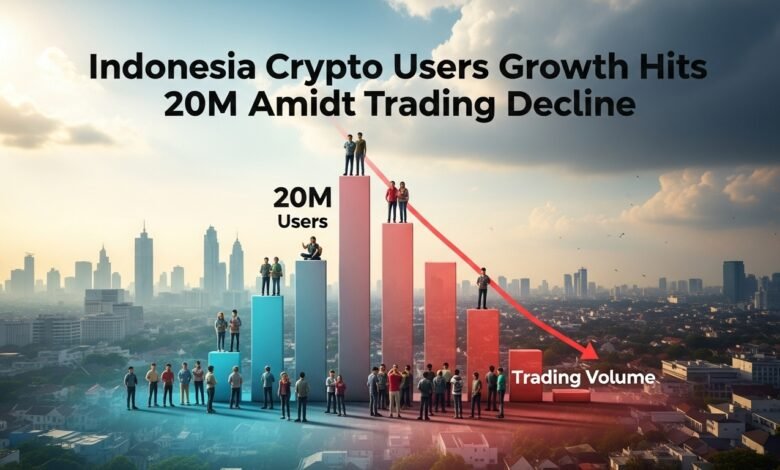
Indonesia’s crypto users growth has surged to an impressive 20 million participants, marking a significant milestone in the nation’s journey toward digital financial adoption. This remarkable expansion comes with an intriguing paradox—while the number of cryptocurrency enthusiasts continues to climb, actual trading volumes have experienced a noticeable contraction. This phenomenon presents a fascinating case study in how emerging markets interact with blockchain technology and digital currencies, reflecting broader shifts in investor behavior, regulatory frameworks, and market maturity across the archipelago nation.
Surge in Indonesia’s Cryptocurrency Adoption
The remarkable Indonesia crypto users growth trajectory tells a compelling story about financial democratization in one of the world’s most populous nations. With over 273 million citizens and a young, tech-savvy population, Indonesia has emerged as a crucial battleground for cryptocurrency adoption in Asia. The expansion to 20 million users represents approximately 7.3% of the total population—a penetration rate that positions Indonesia among the top cryptocurrency markets globally.
Several interconnected factors have contributed to this substantial increase in cryptocurrency adoption in Indonesia. The country’s relatively high smartphone penetration, coupled with improving internet infrastructure, has created an ideal environment for digital asset platforms to flourish. Additionally, Indonesia’s significant unbanked and underbanked population views cryptocurrencies as an alternative pathway to financial services that traditional banking institutions have failed to provide adequately.
The demographic composition of these 20 million users reveals particularly interesting patterns. Millennials and Generation Z individuals constitute the overwhelming majority of Indonesian cryptocurrency investors, drawn to the promise of financial independence, investment diversification, and participation in what they perceive as the future of finance. This younger demographic brings different expectations and behaviors compared to traditional investment markets, often prioritizing long-term holding strategies over frequent trading.
The Paradox: More Users, Less Trading Activity
While Indonesia crypto users growth continues its upward trajectory, trading volumes across Indonesian cryptocurrency exchanges have paradoxically declined. This counterintuitive trend warrants deeper examination to understand the evolving nature of cryptocurrency engagement within the country. Industry analysts point to several explanations for this apparent contradiction between user acquisition and trading activity.
The concept of “HODLing”—cryptocurrency slang for holding assets rather than actively trading them—has gained significant traction among Indonesian digital asset holders. Many users who entered the market during previous bull runs have adopted a long-term investment philosophy, choosing to accumulate and hold their cryptocurrency positions rather than engage in frequent buying and selling. This behavioral shift reflects growing market maturity and a transition from speculative trading to strategic asset allocation.
Market volatility and uncertain global economic conditions have also prompted more conservative approaches among Indonesia’s cryptocurrency community. The dramatic price fluctuations witnessed throughout 2022 and 2023 served as sobering lessons for many retail investors, encouraging a more measured approach to digital asset management. Rather than attempting to time the market through active trading, many users now prefer dollar-cost averaging strategies and passive accumulation.
Regulatory Environment Shaping Indonesia’s Crypto Landscape
Indonesia’s regulatory framework has played a pivotal role in shaping both the Indonesia crypto users growth phenomenon and the patterns of trading activity. The Commodity Futures Trading Regulatory Agency (Bappebti) has established comprehensive regulations governing cryptocurrency trading, requiring all platforms to register and comply with strict operational standards. These regulations, while providing legitimacy and consumer protection, have also introduced complexities that affect trading dynamics.
The Indonesian crypto regulations mandate Know Your Customer (KYC) and Anti-Money Laundering (AML) procedures that have raised the barrier to entry for casual traders while simultaneously building confidence among serious investors. This regulatory clarity has paradoxically encouraged more people to create accounts and verify their identities on exchanges, contributing to the user growth, even as some casual traders find the compliance requirements discouraging for frequent transactions.
Furthermore, Indonesia’s stance on cryptocurrency remains nuanced—digital assets are recognized as commodities and can be traded on registered exchanges, but they cannot be used as payment methods for goods and services. This legal distinction has shaped user behavior, reinforcing the perception of cryptocurrencies as investment vehicles rather than transactional currencies, which naturally influences trading frequency and patterns.
Economic Factors Influencing Cryptocurrency Participation
The broader economic context cannot be overlooked when analyzing Indonesia crypto users growth alongside reduced trading activity. Indonesia’s economy, while generally robust, faces challenges including inflationary pressures, currency fluctuation concerns, and income inequality that make alternative investment opportunities particularly attractive to certain population segments.
Many Indonesian crypto enthusiasts view digital assets as a hedge against rupiah depreciation and a means of preserving purchasing power amid inflation. This perspective encourages accumulation rather than active trading, as users seek to build positions that can serve as long-term stores of value. The accessibility of cryptocurrency investments—with some platforms allowing purchases for as little as a few dollars—has democratized participation in ways that traditional investment vehicles have not.
The gig economy and freelance workforce expansion in Indonesia has also contributed to cryptocurrency market participation. Digital workers receiving international payments often find cryptocurrency solutions more efficient than traditional banking channels, leading them to maintain accounts on exchanges even if they don’t actively trade. This practical utility adds to user numbers without necessarily translating to increased trading volumes.
Educational Initiatives and Market Maturity
The maturation of Indonesia’s cryptocurrency ecosystem has been accompanied by significant improvements in cryptocurrency education and awareness. Exchanges, blockchain companies, and community organizations have invested heavily in educational programs designed to help users understand digital assets beyond superficial hype. This educational focus has produced a more informed user base that approaches cryptocurrency with greater sophistication.
As Indonesian crypto investors become more knowledgeable, their strategies evolve from reactive trading based on market sentiment to proactive portfolio construction based on fundamental analysis and long-term conviction. Educational initiatives covering topics such as blockchain technology, tokenomics, project evaluation, and risk management have empowered users to make more deliberate investment decisions, often resulting in buy-and-hold approaches rather than frequent trading.
Community-driven learning platforms, social media groups, and local cryptocurrency meetups have fostered a culture of knowledge sharing among Indonesia’s digital currency users. These communities often emphasize responsible investing, diversification, and patience—values that naturally lead to reduced trading frequency as participants move away from speculative behavior toward strategic asset accumulation.
Platform Development and User Experience Evolution
The technological infrastructure supporting Indonesia crypto users growth has evolved substantially, with exchanges and platforms continuously improving their offerings to attract and retain users. However, these improvements haven’t necessarily translated into increased trading activity, as many enhancements focus on custody, security, and long-term holding features rather than facilitating high-frequency trading.
Leading Indonesian cryptocurrency platforms have introduced features such as staking, yield farming, and savings products that incentivize users to lock their assets for extended periods rather than actively trade them. These cryptocurrency investment products appeal to users seeking passive income opportunities, contributing to account growth while simultaneously reducing the available supply of assets for active trading markets.
The user experience improvements implemented by exchanges have made account creation and initial setup remarkably straightforward, lowering barriers to entry and facilitating the expansion to 20 million users. However, the same platforms have also implemented cooling-off periods, trading limits, and educational checkpoints that, while protecting users, naturally reduce the frequency of trading transactions, particularly among newer participants in the Indonesian cryptocurrency market.
Global Market Influences on Local Behavior
Indonesia’s cryptocurrency ecosystem does not exist in isolation, and global market conditions significantly impact both Indonesia crypto users growth and trading patterns. The broader cryptocurrency market experienced substantial volatility and several high-profile failures throughout 2022 and 2023, including exchange collapses and major project implosions that reverberated throughout global markets, including Indonesia.
These global events have made Indonesian cryptocurrency participants more cautious and selective in their market engagement. The collapse of prominent platforms and projects served as stark reminders of the risks inherent in cryptocurrency markets, encouraging users to adopt more conservative strategies, conduct thorough due diligence, and reduce exposure through active trading. Many users responded by consolidating holdings, moving assets to self-custody solutions, and reducing overall market activity.
International regulatory developments and policy discussions around cryptocurrency taxation, classification, and oversight have also influenced Indonesian user behavior. As governments worldwide grapple with cryptocurrency regulation, Indonesia’s crypto community watches closely, often adjusting their strategies in anticipation of potential regulatory changes that might affect trading activities or tax obligations.
The Role of Alternative Investment Options
The cryptocurrency landscape in Indonesia exists alongside a growing array of alternative investment opportunities that compete for capital and attention. The emergence of peer-to-peer lending platforms, equity crowdfunding, mutual funds, and government bonds has diversified the investment options available to Indonesian retail investors, potentially drawing capital and active participation away from cryptocurrency trading.
Many of the 20 million cryptocurrency users maintain diversified portfolios that include both digital assets and traditional investments. This diversification strategy naturally reduces the concentration of trading activity within any single asset class, including cryptocurrencies. Indonesian investors increasingly recognize the importance of balanced portfolios, allocating only a portion of their capital to digital assets while maintaining positions in stocks, bonds, and other securities.
The stock market’s accessibility has also improved significantly, with several Indonesian brokerages offering mobile-first platforms with low minimum investments and commission-free trading on certain products. These developments provide alternatives that may attract trading activity away from cryptocurrency exchanges, even as users maintain their cryptocurrency holdings for long-term appreciation potential.
Social and Cultural Factors in Cryptocurrency Adoption
Understanding Indonesia crypto users growth requires consideration of the social and cultural dynamics that influence financial behavior in the archipelago nation. Indonesian culture places significant emphasis on community, family, and social networks, factors that profoundly impact how cryptocurrency information spreads and how investment decisions are made.
The viral nature of cryptocurrency discussions on Indonesian social media platforms has contributed significantly to user acquisition, with success stories and educational content spreading rapidly through networks of friends, family, and online communities. However, this same social dynamic can also promote risk-averse behavior, as negative experiences and cautionary tales circulate equally quickly, potentially discouraging active trading while still maintaining interest in cryptocurrency ownership.
The concept of “gotong royong”—mutual cooperation and communal assistance—manifests in Indonesian cryptocurrency communities through information sharing, group learning, and collective support during market downturns. These community bonds often encourage long-term holding and mutual encouragement during volatility, reducing panic selling and impulsive trading that might otherwise inflate trading volumes.
Future Outlook for Indonesia’s Cryptocurrency Market
The trajectory of Indonesia crypto users growth appears poised to continue, with industry experts projecting further expansion as cryptocurrency becomes increasingly mainstream within Indonesian financial culture. However, the relationship between user numbers and trading activity may continue to diverge as the market matures and user behavior evolves.
Several developments could influence future patterns in the Indonesian cryptocurrency ecosystem. Central Bank Digital Currency (CBDC) initiatives, with Bank Indonesia actively exploring a digital rupiah, may introduce new dynamics that affect how citizens interact with digital assets. The potential introduction of a government-backed digital currency could either complement existing cryptocurrency adoption or create competition for user attention and capital.
Institutional participation represents another frontier for Indonesia’s crypto market. As regulatory clarity improves and infrastructure develops, institutional investors including pension funds, insurance companies, and corporations, may enter the market, potentially bringing different trading patterns and behaviors than the current retail-dominated landscape.
Technological advancements in blockchain scalability, interoperability, and user experience will continue shaping how Indonesian crypto users interact with digital assets. Layer-2 solutions, improved wallet technologies, and integration with traditional financial systems could make cryptocurrency more practical for everyday use, potentially reigniting trading activity as friction points are removed and utility cases expand.
Conclusion
The phenomenon of Indonesia crypto users growth reaching 20 million participants while trading activity declines offers valuable insights into the evolving nature of cryptocurrency adoption in emerging markets. This apparent paradox actually reflects market maturation, improved investor education, strategic long-term thinking, and the development of a more sophisticated understanding of digital assets beyond speculative trading.
For individuals interested in participating in Indonesia’s cryptocurrency market, this environment presents unique opportunities. The combination of growing user bases, improving infrastructure, clearer regulations, and educated communities creates favorable conditions for strategic investment approaches. Whether you’re among the current 20 million users or considering joining Indonesia’s vibrant crypto community, focusing on education, risk management, and long-term value creation positions you for success in this dynamic market.
As Indonesia continues its digital transformation journey, cryptocurrency will undoubtedly play an increasingly important role in the nation’s financial landscape, offering Indonesian crypto users unprecedented opportunities for financial inclusion, wealth building, and participation in the global digital economy.
See more;Alchemy Pay Is Expanding To Support Scroll Network
