
U.S. Debanking Government Pressure: Cato Report Reveals Truth
Cato report exposes how U.S. debanking government pressure affects banking access. Learn the shocking truth about financial censorship. (

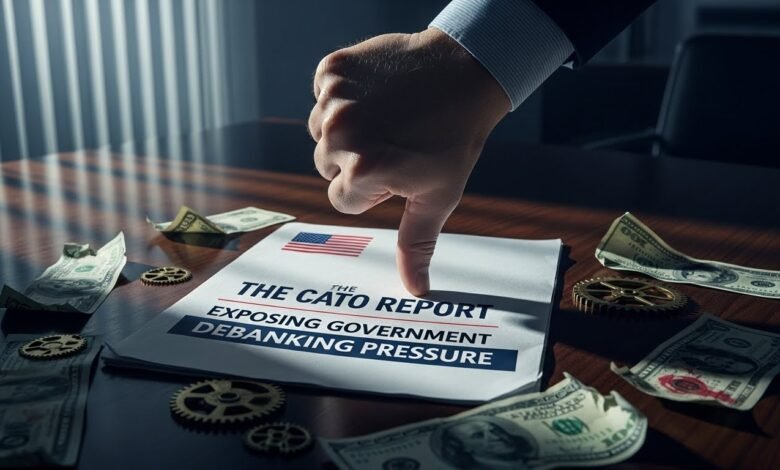
The landscape of American banking has undergone a troubling transformation over the past decade, with thousands of individuals and businesses finding themselves suddenly cut off from financial services without a clear explanation. A groundbreaking report from the Cato Institute has now lifted the curtain on this phenomenon, revealing that U.S. government pressure is the primary driver behind most cases where Americans lose access to basic banking services. This comprehensive investigation exposes how federal agencies have systematically influenced financial institutions to terminate customer relationships, raising serious questions about due process, financial freedom, and the proper role of government in private banking decisions.
The findings challenge the conventional narrative that banks independently choose to sever ties with certain customers based solely on risk assessments. Instead, the evidence suggests a coordinated effort by government entities to weaponize the banking system against industries and individuals deemed undesirable, often without formal legal proceedings or transparent criteria.
Debanking Crisis in America
Debanking refers to the practice of financial institutions terminating or denying banking services to customers, effectively cutting them off from the modern financial system. Without access to basic banking services like checking accounts, payment processing, or merchant services, individuals and businesses face severe operational challenges that can threaten their very survival in today’s digital economy.
The Cato Institute’s comprehensive analysis examined hundreds of documented cases spanning multiple industries and individual circumstances. What emerged was a disturbing pattern that contradicts the banking industry’s public statements about independent risk management decisions. The research methodology included reviewing regulatory documents, interviewing affected parties, analyzing government communications with financial institutions, and tracking patterns across different sectors and time periods.
According to the report, the majority of debanking incidents can be traced back to explicit or implicit pressure from federal regulatory agencies rather than genuine concerns about fraud, money laundering, or other legitimate compliance issues. This finding represents a fundamental shift in how we must understand the relationship between government oversight and banking autonomy.
The Cato Report’s Key Findings on Government Pressure
The Cato Institute’s investigation uncovered several mechanisms through which government agencies exert influence over banking decisions. These findings paint a picture of systematic financial censorship that operates largely outside public scrutiny and constitutional protections.
Direct Regulatory Intimidation
Federal agencies, including the Federal Deposit Insurance Corporation, the Office of the Comptroller of the Currency, and the Financial Crimes Enforcement Network, have developed sophisticated methods for communicating their preferences regarding which customers banks should serve. The report documents instances where examiners during routine bank inspections made clear that maintaining relationships with certain types of businesses would result in increased regulatory scrutiny, higher compliance costs, and potential enforcement actions.
This government pressure on banks often takes the form of verbal warnings, informal guidance, or pointed questions during examinations rather than formal directives, making it difficult to challenge through legal channels. Banks, operating under the constant threat of regulatory action that could jeopardize their charters or result in massive fines, have little choice but to comply with these unwritten demands.
Operation Chokepoint and Its Legacy
The report extensively examines Operation Chokepoint, a controversial Obama administration initiative that officially ran from 2013 to 2017. This program targeted businesses in industries deemed to pose reputational risk to banks, including firearms dealers, payday lenders, coin dealers, and adult entertainment businesses. While the Department of Justice claimed the operation aimed to combat fraud, the Cato research reveals it functioned primarily as a mechanism for financial censorship against legally operating businesses in disfavored industries.
Even after Operation Chokepoint’s official termination, the report finds that similar practices have continued under different names and through different agencies. The infrastructure and relationships established during that period remain active, allowing government officials to continue influencing banking access for targeted industries and individuals.
Reputational Risk as a Cudgel
One of the most insidious mechanisms identified involves the concept of “reputational risk.” Federal regulators have increasingly pressured banks to consider whether serving certain customers might damage the institution’s reputation, even when those customers operate entirely within the law. This subjective standard provides enormous discretion to both regulators and banks while offering virtually no recourse for those denied services.
The banking discrimination enabled by reputational risk concerns affects industries ranging from cryptocurrency and cannabis-related businesses to firearms manufacturers and political activists. Because reputation is inherently subjective, banks can justify almost any decision to terminate relationships by citing this concern, while regulators can point to it as justification for pressuring institutions to avoid certain sectors.
Industries Most Affected by Debanking Practices
The Cato report identifies several industries that have been disproportionately targeted through U.S. government pressure, creating entire sectors where accessing basic financial services has become extraordinarily difficult despite operating legally under state and federal law.
Cryptocurrency and Blockchain Businesses
The cryptocurrency industry has faced perhaps the most aggressive debanking campaign of any legal sector. Despite the growing mainstream acceptance of digital assets and blockchain technology, businesses in this space routinely struggle to maintain banking relationships. The report documents numerous cases where crypto exchanges, wallet providers, and blockchain startups had accounts terminated with minimal explanation.
This systematic exclusion occurs despite these businesses often implementing robust compliance programs that exceed those of traditional financial services companies. The pressure appears motivated by regulators’ desire to control or limit the growth of decentralized finance rather than genuine compliance concerns, according to the Cato analysis.
Cannabis-Related Enterprises
Even in states where marijuana has been legalized for recreational or medical use, cannabis businesses face enormous challenges accessing banking services due to federal prohibition and regulatory pressure. The report highlights how financial access denial for this industry creates serious public safety issues, forcing businesses to operate largely in cash and making them targets for crime.
Banks that have attempted to serve state-legal cannabis businesses report facing intense scrutiny from federal regulators, including threats of money laundering charges and charter revocations. This creates a paradoxical situation where state-licensed, heavily regulated businesses cannot access the same financial system available to any other legal enterprise.
Firearms Industry Participants
Gun manufacturers, dealers, and related businesses have experienced systematic debanking despite the Second Amendment’s constitutional protections. The Cato report documents how Operation Chokepoint specifically targeted firearms dealers, and how this pressure has continued even after that program’s official end.
From gunsmiths to ammunition sellers to shooting ranges, businesses throughout the firearms ecosystem report sudden account closures, denied merchant services, and refusal of business loans. This political debanking effectively allows government agencies to restrict constitutional rights through financial pressure rather than legislative action.
Political and Advocacy Organizations
Perhaps most concerning from a civil liberties perspective, the report identifies cases where political activists, advocacy groups, and even individual political dissidents have been debanked based on their viewpoints or affiliations. Both left-leaning and right-leaning organizations have experienced this treatment, though the report notes different agencies and administrations have targeted different ideological perspectives.
This represents a direct threat to political participation and free speech, as modern political organizing depends heavily on digital payment processing, fundraising platforms, and banking services. When government pressure results in these tools being denied based on political viewpoint, it creates a dangerous precedent for state control over civic participation.
The Mechanism of Informal Regulatory Pressure
Understanding how U.S. debanking government pressure operates requires examining the subtle mechanisms through which regulatory agencies communicate their preferences to financial institutions without creating formal records or actionable directives.
The Culture of Regulatory Capture
The Cato report explores how the regulatory environment has evolved to create what researchers term “anticipatory compliance,” where banks proactively avoid serving certain customers not because of explicit rules but because they anticipate regulatory disapproval. This dynamic emerges from the asymmetric power relationship between regulators and regulated institutions.
Bank executives know that their institutions’ futures depend on maintaining positive relationships with regulatory agencies. When examiners signal displeasure with certain customer relationships, banks understand these signals as implicit threats, even when couched in the language of suggestions or questions. This creates a system where government pressure on banks operates effectively through raised eyebrows and pointed questions rather than formal enforcement actions.
Guidance Documents and Informal Communications
Federal agencies regularly issue guidance documents, industry letters, and supervisory statements that, while technically non-binding, carry enormous weight with financial institutions. The report documents how these communications have been used to signal which industries regulators view unfavorably without creating formal rules subject to public comment or judicial review.
This approach allows agencies to implement policy preferences that might not survive legislative scrutiny or court challenges if implemented through formal rulemaking. Banks, operating under perpetual regulatory oversight, cannot afford to ignore these signals even when they recognize their dubious legal foundation.
The Examination Process as an Enforcement Tool
Regular bank examinations, ostensibly designed to ensure safety and soundness, have become a primary vehicle for communicating regulatory preferences about customer selection. Examiners’ questions about why a bank serves particular customers, suggestions that certain relationships create heightened risk, and warnings about increased monitoring create powerful incentives for banks to terminate relationships preemptively.
The banking compliance burden becomes particularly heavy when examiners indicate that serving certain industries will result in more frequent examinations, additional reporting requirements, or elevated capital requirements. For many banks, especially smaller institutions with limited compliance resources, the implicit message is clear: serving controversial customers is not worth the regulatory cost.
Constitutional and Legal Implications
The practices documented in the Cato report raise serious constitutional questions about due process, equal protection, and the limits of regulatory authority. When government agencies pressure private institutions to deny services based on factors unrelated to legitimate regulatory concerns, they may be accomplishing indirectly what they could not do directly without violating constitutional constraints.
Due Process Violations
Individuals and businesses debanked due to government pressure receive no hearing, face no formal charges, and have no meaningful opportunity to respond to allegations or challenge decisions. This circumvents the due process protections that would apply if the government directly prohibited these activities or imposed sanctions. The Cato report argues this represents a serious erosion of fundamental legal protections.
First Amendment Concerns
When political debanking targets individuals or organizations based on their speech, associations, or advocacy, it implicates First Amendment protections. While private companies generally can choose their customers, the constitutional calculus changes when those decisions result from government pressure. Courts have recognized that the government cannot accomplish through private intermediaries what it cannot do directly.
Separation of Powers Issues
The report highlights how regulatory agencies are effectively making policy decisions about which legal industries should have access to banking services without congressional authorization. This represents a significant expansion of executive power into areas traditionally reserved for legislative action, raising separation of powers concerns.
The Economic Impact of Systematic Debanking
Beyond individual hardship, the systematic practice of U.S. government pressure creates broader economic consequences that affect innovation, competition, and economic efficiency.
Innovation Suppression
When entire sectors struggle to access banking services, innovation in those areas slows dramatically. Cryptocurrency and financial technology startups, for example, report that securing banking relationships represents one of their most significant operational challenges, diverting resources from product development and market expansion. This financial censorship effectively allows regulatory preferences to override market signals about which innovations consumers value.
Competitive Disadvantages
Businesses forced to operate without normal banking access face substantial competitive disadvantages. They pay higher costs for alternative payment processing, struggle to attract investors who require standard financial reporting, and cannot offer customers the payment options they expect. These challenges create artificial barriers to entry that protect established players from competition.
Economic Marginalization
For individuals debanked due to association with controversial industries or viewpoints, the economic consequences can be devastating. Modern life requires banking access for everything from receiving paychecks to paying bills to building credit. When people lose this access without committing any crime or violating any clear rule, they face effective economic exile.
Responses and Proposed Solutions
The Cato report concludes with several recommendations for addressing the debanking crisis while maintaining legitimate regulatory oversight of the financial system.
Legislative Reforms
The report advocates for congressional action to clearly define the boundaries of regulatory authority over banking decisions. Proposed legislation could require agencies to identify specific legal violations or genuine safety and soundness concerns before pressuring banks to terminate customer relationships. This would restore transparency and accountability to the process while preserving regulators’ ability to address actual problems.
Judicial Oversight
Courts could play a larger role in reviewing debanking decisions that appear motivated by regulatory pressure rather than legitimate business concerns. By recognizing that government involvement in nominally private decisions triggers constitutional protections, judges could provide remedies for those wrongfully excluded from the financial system.
Regulatory Accountability
The report calls for greater transparency in regulatory communications with banks, including requirements to document the reasoning behind guidance that affects entire industries. When agencies signal that certain types of customers pose problems, they should be required to articulate specific legal or regulatory violations rather than vague concerns about reputation or political pressure.
Alternative Financial Infrastructure
Some advocates suggest that the solution lies in developing an alternative financial infrastructure less susceptible to government pressure on banks. This could include expanded credit union participation, state-chartered institutions focused on underserved industries, or further development of decentralized financial technologies that operate outside traditional banking systems.
The Path Forward for Financial Freedom
The Cato Institute’s findings represent a crucial contribution to understanding how U.S. government pressure threatens both individual liberty and economic dynamism. By documenting the mechanisms through which regulatory agencies influence banking decisions outside formal legal processes, the report provides a foundation for reforms that could restore meaningful financial access while maintaining appropriate oversight.
The challenge moving forward involves balancing legitimate regulatory interests in preventing fraud and money laundering with the fundamental principle that legal businesses and law-abiding individuals should not be excluded from the financial system based on regulatory preferences or political considerations. This balance requires clear rules, transparent processes, and meaningful accountability for both regulators and financial institutions.
As public awareness of these practices grows, pressure for reform may increase from across the political spectrum. Both progressive advocates concerned about cannabis businesses and civil liberties, and conservative voices worried about firearms industry access and political discrimination, have reasons to support changes that would limit arbitrary banking discrimination.
Conclusion
The Cato Institute’s comprehensive examination of U.S. debanking government pressure reveals a troubling reality where federal agencies systematically influence banking decisions to accomplish policy goals they could not achieve through legitimate legislative or regulatory processes. This practice threatens fundamental rights, suppresses economic innovation, and creates arbitrary barriers that affect millions of Americans.
Understanding the scope and mechanisms of government-driven debanking represents the first step toward meaningful reform. The evidence now clearly demonstrates that this is not a problem of private sector discrimination or independent risk management decisions, but rather a coordinated effort by regulatory agencies to weaponize banking access against disfavored industries and viewpoints.
Whether you operate a business in a controversial sector, advocate for political causes, or simply value financial freedom and due process, the findings of this report should concern you. The infrastructure and precedents established through these practices could be turned against any group or industry that falls out of regulatory favor, regardless of legal compliance or legitimate business purpose.
If you have experienced U.S. debanking government pressure or want to support reforms that would protect financial access for all legal businesses and individuals, consider contacting your elected representatives to demand legislative action that establishes clear boundaries for regulatory influence over banking decisions. The future of financial freedom depends on citizens insisting that government power be exercised transparently, with proper legal authority, and with respect for constitutional protections that prevent arbitrary exclusion from the economic system.
The time has come to end the practice of financial censorship through regulatory pressure and restore a banking system that serves all Americans engaged in lawful activities, regardless of political considerations or bureaucratic preferences.
