
Grayscale Bitcoin Price Prediction 2026: Will BTC Hit New ATH?
Discover Grayscale's Bitcoin price prediction for 2026. Expert analysis on whether BTC will reach a new all-time high with market insights.

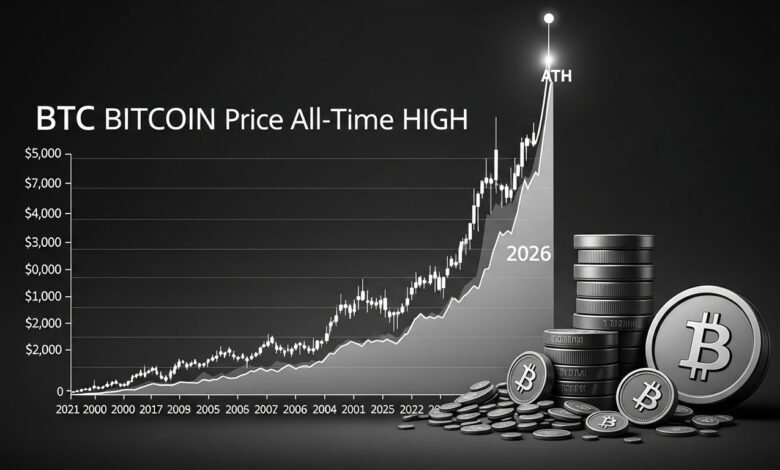
Bitcoin price prediction 2026 becoming one of the most searched topics among digital asset enthusiasts. Grayscale Investments, the world’s largest digital currency asset manager, has released compelling forecasts that suggest Bitcoin could potentially surge to unprecedented levels within the next two years. As institutional adoption accelerates and regulatory frameworks evolve, the question on every investor’s mind is whether BTC will achieve a new all-time high in 2026. This comprehensive analysis explores Grayscale’s projections, examines market fundamentals, and evaluates the factors that could propel Bitcoin toward record-breaking valuations.
Understanding Grayscale’s Bitcoin price prediction requires examining multiple variables including halving cycles, institutional investment trends, macroeconomic conditions, and technological developments within the blockchain ecosystem. With Bitcoin’s historical performance demonstrating cyclical patterns and Grayscale managing billions in cryptocurrency assets, their insights carry significant weight in the investment community.
Grayscale’s Track Record in Bitcoin Price Forecasting
Grayscale Investments has established itself as a authoritative voice in cryptocurrency market analysis. The firm’s Bitcoin price prediction 2026 is grounded in extensive research, historical data analysis, and sophisticated market modeling. Founded in 2013, Grayscale has witnessed multiple Bitcoin bull and bear cycles, providing them with unique insights into price movement patterns.
The investment management firm operates the Grayscale Bitcoin Trust (GBTC), which has served as a primary vehicle for institutional investors seeking Bitcoin exposure. Their analysts have consistently published reports examining Bitcoin’s fundamentals, including network growth, mining economics, and adoption metrics. When Grayscale releases a Bitcoin price forecast, institutional investors and retail traders alike pay close attention.
Historical Accuracy of Grayscale Predictions
Examining Grayscale’s previous predictions reveals a mixed but generally bullish stance on Bitcoin’s long-term trajectory. In 2020, Grayscale’s research team accurately anticipated the institutional investment wave that drove Bitcoin from $10,000 to over $60,000. Their analysis highlighted the macroeconomic environment of unprecedented monetary expansion, which indeed catalyzed the 2021 bull run.
However, like all market forecasters, Grayscale has experienced both accurate and conservative predictions. Their BTC price prediction models typically focus on long-term fundamental value rather than short-term price volatility. This approach aligns with their institutional client base, which maintains multi-year investment horizons.
What Grayscale Predicts for Bitcoin in 2026
According to Grayscale’s latest research reports, the firm presents several scenarios for Bitcoin price prediction 2026, with their base case suggesting Bitcoin could reach between $150,000 and $250,000 per coin. This projection represents a substantial increase from current levels and would establish a new all-time high for the cryptocurrency.
The Grayscale Bitcoin forecast is built upon several key assumptions that include continued institutional adoption, Bitcoin’s position as a store of value asset, and the completion of another halving cycle in 2024. The firm’s analysts emphasize that Bitcoin’s fixed supply of 21 million coins combined with increasing demand creates fundamental supply-demand dynamics favoring price appreciation.
Base Case Scenario: $175,000 BTC
Grayscale’s base case scenario for Bitcoin in 2026 projects a price target of approximately $175,000. This prediction assumes moderate institutional adoption continues, regulatory frameworks become clearer in major markets, and macroeconomic conditions remain supportive of alternative assets. The scenario factors in Bitcoin capturing a larger percentage of global investment portfolios as a digital gold alternative.
This Bitcoin price target would represent approximately a 150% increase from Bitcoin’s previous all-time high of around $69,000 achieved in November 2021. The projection aligns with Bitcoin’s historical post-halving performance, where prices typically peak 12-18 months after the halving event.
Bull Case Scenario: Beyond $250,000
In Grayscale’s optimistic projection, Bitcoin could exceed $250,000 if several catalysts align simultaneously. These factors include accelerated institutional adoption, sovereign wealth funds allocating significant capital to Bitcoin, successful Bitcoin ETF launches attracting mainstream investors, and Bitcoin establishing itself as a legitimate portfolio diversification tool.
The bull case for BTC price prediction 2026 also considers the potential impact of currency devaluation in major economies, geopolitical instability driving safe-haven asset demand, and technological improvements to Bitcoin’s infrastructure including Lightning Network adoption for everyday transactions.
Key Factors Supporting Grayscale’s Bitcoin Price Prediction
Bitcoin Halving Cycle Impact
The Bitcoin halving mechanism, which reduces miner rewards by 50% approximately every four years, plays a crucial role in Grayscale’s Bitcoin price prediction 2026. The next halving occurred in April 2024, reducing block rewards from 6.25 BTC to 3.125 BTC per block. Historically, Bitcoin prices have appreciated significantly in the 12-24 months following each halving event.
This supply shock mechanism creates scarcity that, when combined with steady or increasing demand, typically drives price appreciation. Grayscale’s analysts incorporate this cyclical pattern into their Bitcoin forecast models, noting that 2026 would fall within the optimal timeframe for post-halving price peaks based on historical precedents from 2013, 2017, and 2021.
Institutional Adoption Acceleration
Institutional investment represents perhaps the most significant factor in Grayscale’s bullish Bitcoin price prediction for 2026. Major financial institutions, including BlackRock, Fidelity, and numerous hedge funds, have increasingly allocated capital to Bitcoin. The approval of spot Bitcoin ETFs in the United States marked a watershed moment, providing regulated access for institutional investors.
Grayscale’s research indicates that if Bitcoin captures just 5% of global investable assets, the price per coin could exceed $500,000. While their 2026 predictions are more conservative, the trajectory of institutional adoption suggests significant upward price pressure. Corporate treasury allocations, following examples set by companies like MicroStrategy and Tesla, further support the Bitcoin price growth thesis.
Macroeconomic Environment and Inflation Hedge
The macroeconomic backdrop significantly influences Grayscale’s Bitcoin price prediction 2026. With central banks having expanded money supply dramatically in recent years, concerns about currency devaluation and inflation persist. Bitcoin’s fixed supply and decentralized nature position it as a potential hedge against monetary debasement.
Grayscale’s analysis emphasizes Bitcoin’s correlation patterns with traditional assets. As Bitcoin matures, it may demonstrate increased stability while maintaining its characteristic as an inflation-resistant store of value. This dual nature could attract conservative institutional investors seeking portfolio diversification, supporting higher BTC valuations through 2026.
Global Regulatory Clarity
Regulatory developments worldwide play a crucial role in Grayscale’s Bitcoin forecast. The firm anticipates that clearer regulatory frameworks in major markets including the United States, European Union, and Asia will reduce uncertainty and encourage institutional participation. Comprehensive regulations that protect investors while allowing innovation could unleash significant capital inflows into Bitcoin.
Countries establishing favorable cryptocurrency regulations, creating national Bitcoin reserves, or adopting Bitcoin as legal tender (following El Salvador’s example) would validate Grayscale’s bullish price predictions for 2026. Regulatory clarity removes a major barrier preventing institutional allocations and mainstream adoption.
Technical Analysis Supporting the 2026 Price Target
On-Chain Metrics and Network Health
Grayscale’s Bitcoin price prediction incorporates extensive on-chain analysis examining network fundamentals. Key metrics including active addresses, transaction volumes, hash rate growth, and holder accumulation patterns all inform their projections. The Bitcoin network’s hash rate has reached all-time highs, indicating robust miner commitment and network security.
Long-term holder behavior, tracked through on-chain analysis, shows accumulation patterns typically associated with price bottoms and consolidation phases. When long-term holders accumulate while short-term speculators exit, it historically precedes significant price appreciation. These patterns support Grayscale’s 2026 Bitcoin price targets.
Stock-to-Flow Model Alignment
While Grayscale doesn’t rely exclusively on any single model, the stock-to-flow (S2F) framework aligns broadly with their Bitcoin price prediction for 2026. The S2F model, which compares Bitcoin’s existing supply to new production, has historically correlated with price movements. Post-2024 halving, the model suggests Bitcoin prices could range between $100,000 and $300,000 during the 2025-2026 timeframe.
Grayscale’s analysts acknowledge the S2F model’s limitations but incorporate its insights into comprehensive forecasting that considers multiple valuation methodologies. The convergence of various analytical frameworks strengthening the case for Bitcoin reaching new all-time highs by 2026.
Potential Risks to Grayscale’s Bitcoin Price Prediction
Regulatory Challenges and Government Intervention
Despite optimistic projections, Grayscale acknowledges significant risks that could derail their Bitcoin price prediction 2026. Adverse regulatory actions, including outright bans in major economies, excessive taxation, or prohibitive compliance requirements, could suppress Bitcoin adoption and price appreciation. China’s cryptocurrency ban demonstrated how government actions can impact market sentiment, though Bitcoin’s decentralized nature ultimately proved resilient.
The United States regulatory approach remains particularly crucial. Unfavorable SEC decisions, restrictive legislation, or aggressive enforcement actions could create headwinds preventing Bitcoin from reaching Grayscale’s projected price targets. Regulatory uncertainty remains one of the primary risks to the bullish 2026 scenario.
Technological Vulnerabilities and Competition
Technological risks, while considered low probability, could impact Bitcoin’s price trajectory. A catastrophic security breach, quantum computing threats to Bitcoin’s cryptographic foundations, or critical protocol failures could undermine investor confidence. Additionally, competition from other cryptocurrencies offering superior technology, faster transactions, or more efficient consensus mechanisms could erode Bitcoin’s market dominance.
Grayscale’s analysis accounts for these risks while noting Bitcoin’s robust development community, extensive security testing, and ability to implement necessary upgrades. The Bitcoin network has operated continuously for over fifteen years without a successful attack, providing strong evidence of its resilience.
Macroeconomic Shocks and Market Correlation
Global economic crises, geopolitical conflicts, or financial market collapses could temporarily derail Bitcoin price predictions. While Bitcoin was designed as an alternative to traditional financial systems, it has demonstrated correlation with risk assets during periods of extreme market stress. A severe recession could force investors to liquidate Bitcoin holdings, creating downward price pressure.
However, Grayscale’s research suggests that Bitcoin’s correlation with traditional assets may decrease as it matures and establishes itself as a distinct asset class. The 2026 price forecast assumes no catastrophic economic events that would fundamentally alter global investment patterns.
Comparing Grayscale’s Prediction with Other Analysts
Wall Street Perspectives on Bitcoin 2026
Major financial institutions have published varying Bitcoin price predictions for 2026, creating a spectrum of forecasts. JPMorgan analysts have suggested Bitcoin could reach $150,000 if it captures gold’s market share as a store of value. Cathie Wood’s ARK Invest presents even more bullish scenarios, with bear case predictions around $250,000 and bull cases exceeding $1 million by 2030.
Goldman Sachs research indicates Bitcoin could achieve $100,000 to $200,000 within the next several years as institutional adoption continues. These projections generally align with Grayscale’s Bitcoin forecast, suggesting industry consensus around substantial upside potential. The convergence of multiple independent analyses strengthens confidence in the general price direction, even if specific targets vary.
Cryptocurrency-Native Analysts and Models
Cryptocurrency analysts using technical and on-chain metrics often present more aggressive Bitcoin price predictions. Plan B’s stock-to-flow model, various regression analyses, and power law models suggest Bitcoin could trade between $200,000 and $500,000 during the 2025-2026 period. These models, while controversial, have historically aligned with Bitcoin’s long-term price trajectory.
Grayscale’s approach tends to be more conservative than cryptocurrency-native models, reflecting their institutional investor base that values measured analysis over speculative extremes. Their 2026 BTC predictions balance optimism with realistic assessment of risks and market dynamics.
Investment Strategies Based on Grayscale’s Bitcoin Forecast
Dollar-Cost Averaging Approach
For investors considering Grayscale’s Bitcoin price prediction 2026, dollar-cost averaging (DCA) represents a prudent strategy. This approach involves consistently purchasing fixed dollar amounts of Bitcoin regardless of price, reducing the impact of volatility and eliminating timing risk. If Grayscale’s projections prove accurate, DCA investors purchasing between now and 2026 would benefit from accumulating Bitcoin below the eventual price peak.
The DCA strategy aligns well with long-term Bitcoin investment philosophies, particularly given the cryptocurrency’s characteristic volatility. Investors following this approach throughout previous cycles achieved substantial returns while managing emotional decision-making that often accompanies volatile assets.
Portfolio Allocation Considerations
Financial advisors increasingly recommend modest Bitcoin allocations within diversified portfolios. Based on Grayscale’s Bitcoin price forecast, allocations between 1% and 5% of total portfolio value could provide meaningful upside exposure while limiting downside risk. This approach allows investors to participate in Bitcoin’s potential appreciation toward Grayscale’s 2026 targets without excessive concentration risk.
Portfolio construction should consider individual risk tolerance, investment timeline, and overall financial goals. Grayscale’s own products, including GBTC and various cryptocurrency trusts, provide vehicles for gaining Bitcoin exposure through traditional brokerage accounts, appealing to investors preferring regulated investment products.
Risk Management and Exit Strategies
While Grayscale presents compelling Bitcoin price predictions for 2026, prudent investors develop risk management strategies before investing. Setting predetermined exit points, whether based on price targets, time horizons, or portfolio rebalancing triggers, helps maintain discipline during emotional market periods. If Bitcoin reaches Grayscale’s projected levels, systematically taking profits could lock in gains while maintaining exposure to further appreciation.
Stop-loss orders, position sizing, and diversification across multiple cryptocurrencies or traditional assets all contribute to comprehensive risk management. Grayscale’s institutional approach emphasizes long-term holding while acknowledging that market conditions can change, requiring flexible investment strategies.
Bitcoin’s Role in the Future Financial System
Digital Gold Narrative Strengthening
Grayscale’s Bitcoin price prediction 2026 relies heavily on Bitcoin’s evolution as “digital gold.” This narrative positions Bitcoin as a superior store of value compared to physical gold, offering advantages including easier transferability, divisibility, verifiability, and scarcity. As younger generations prefer digital assets over physical commodities, Bitcoin could capture an increasing share of the approximately $12 trillion gold market.
If Bitcoin achieves even 10% of gold’s market capitalization, its price would exceed $600,000 per coin. Grayscale’s more conservative 2026 predictions suggest Bitcoin is still in early stages of this transition, with significant runway for appreciation as the digital gold narrative gains mainstream acceptance.
Central Bank Digital Currencies and Bitcoin
The development of central bank digital currencies (CBDCs) worldwide could paradoxically benefit Bitcoin by validating digital currency concepts while highlighting Bitcoin’s unique properties. Unlike CBDCs, which governments control, Bitcoin remains decentralized and censorship-resistant. Grayscale’s analysis suggests that CBDC rollouts may increase public awareness of digital currencies, potentially driving interest toward Bitcoin as an alternative to government-controlled digital money.
The contrast between programmable, controllable CBDCs and permissionless Bitcoin could strengthen demand for BTC as a neutral, decentralized asset. This dynamic supports Grayscale’s optimistic long-term price projections extending through 2026 and beyond.
How Mining Economics Support Bitcoin Price Growth
Hash Rate and Network Security
Bitcoin’s hash rate, which measures the computational power securing the network, continues reaching new all-time highs despite the 2024 halving reducing miner revenues. This demonstrates miners’ long-term confidence in Bitcoin’s future price appreciation. Miners, who operate with extensive Bitcoin knowledge and bear significant operational costs, wouldn’t continue investing in infrastructure unless they anticipated substantial price increases.
Grayscale’s Bitcoin price prediction considers miner behavior as a leading indicator of future price movements. The miner capitulation cycles that typically precede major bull runs have already occurred, suggesting the foundation for the next appreciation cycle toward 2026 price targets is established.
Energy Transition and Sustainable Mining
Bitcoin mining’s increasing use of renewable energy sources addresses one criticism that previously limited institutional adoption. Grayscale’s research highlights that over 50% of Bitcoin mining now utilizes sustainable energy, with this percentage continuing to increase. As mining becomes carbon-neutral or even carbon-negative through innovative energy solutions, another barrier to mainstream adoption falls.
This transition supports higher Bitcoin valuations by making the asset more acceptable to ESG-conscious institutional investors. Grayscale factors this evolving narrative into their 2026 projections, anticipating that environmental concerns will diminish as mining further embraces renewable energy.
Alternative Scenarios: What If Bitcoin Doesn’t Reach ATH in 2026?
Bear Case Analysis
While Grayscale presents compelling bullish arguments, responsible analysis requires considering scenarios where Bitcoin doesn’t achieve new all-time highs by 2026. Extended regulatory uncertainty, a major security breach, superior competing technologies, or prolonged macroeconomic weakness could suppress Bitcoin prices below previous peaks.
In this scenario, Bitcoin might trade between $30,000 and $60,000 throughout 2025-2026, representing modest appreciation or even decline from current levels. Grayscale assigns lower probability to this outcome but acknowledges that cryptocurrency markets remain inherently unpredictable and subject to factors beyond traditional financial analysis.
Sideways Market Consolidation
An intermediate scenario involves Bitcoin consolidating within a range without achieving Grayscale’s price targets for 2026 or collapsing significantly. This outcome might occur if institutional adoption proceeds more slowly than anticipated, regulatory frameworks remain unclear, or global economic conditions create mixed signals for alternative assets.
Even in consolidation scenarios, Bitcoin’s long-term prospects remain positive according to Grayscale’s analysis. Delayed price appreciation would simply extend the investment timeline rather than invalidating the fundamental investment thesis supporting eventual higher valuations.
Preparing for Bitcoin’s Potential 2026 Surge
Educational Resources and Due Diligence
Investors considering positions based on Grayscale’s Bitcoin price prediction 2026 should conduct thorough due diligence. Understanding Bitcoin’s technology, security model, economic principles, and risk factors enables informed decision-making. Grayscale’s research reports, available on their website, provide comprehensive analysis suitable for both novice and experienced investors.
Educational resources from sources including Grayscale, academic institutions, and reputable cryptocurrency publications help investors develop frameworks for evaluating Bitcoin’s investment potential. Making informed decisions based on fundamental understanding rather than speculation creates better long-term outcomes.
Selecting Appropriate Investment Vehicles
Multiple pathways exist for gaining Bitcoin exposure in anticipation of potential 2026 price appreciation. Direct Bitcoin purchases through exchanges offer complete ownership and control but require managing private keys and security. Grayscale’s Bitcoin Trust (GBTC) and similar products provide indirect exposure through traditional brokerage accounts, appealing to investors preferring regulated products.
Newly approved spot Bitcoin ETFs combine benefits of both approaches, offering direct Bitcoin exposure with the convenience and regulatory oversight of traditional investment products. Selecting appropriate vehicles depends on individual circumstances, technical expertise, and investment goals related to capturing Bitcoin’s potential upside through 2026.
Conclusion
Grayscale’s comprehensive Bitcoin price prediction for 2026 presents a compelling case for Bitcoin achieving new all-time highs, potentially reaching between $150,000 and $250,000 per coin. This forecast is grounded in Bitcoin’s fundamental supply dynamics, accelerating institutional adoption, improving regulatory clarity, and the cryptocurrency’s strengthening position as digital gold.
While risks including regulatory challenges, technological vulnerabilities, and macroeconomic uncertainty exist, the convergence of multiple positive factors supports Grayscale’s optimistic outlook. The firm’s track record, extensive research capabilities, and position managing billions in cryptocurrency assets lend credibility to their projections.
Whether Bitcoin achieves these ambitious price targets depends on numerous variables unfolding over the next two years. However, the fundamental case for Bitcoin appreciation remains robust, supported by fixed supply meeting increasing demand from institutional and retail investors worldwide.
For investors considering exposure to Bitcoin’s potential 2026 rally, developing a thoughtful strategy incorporating proper position sizing, risk management, and long-term perspective is essential. Grayscale’s analysis provides valuable framework for understanding Bitcoin’s trajectory, though individual investment decisions should account for personal financial circumstances and risk tolerance.
See more;Charles Edwards Bitcoin $150K Prediction 2025 | BTC Forecast
