
Digital Tokens: 8 Types of Crypto Coins You Must Know
Discover digital tokens and 8 types of crypto coins shaping the future of finance. Learn how each coin type works and which ones matter most.

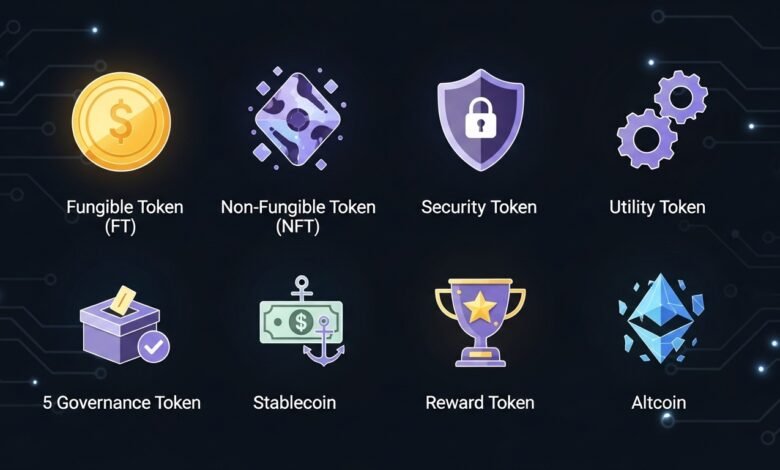
digital tokens — and understanding the landscape has never been more important. Whether you are a first-time investor trying to make sense of your crypto wallet or a developer exploring what blockchain can do, knowing the types of crypto coins is the single most valuable place to start.
Not all cryptocurrencies are created equal. Behind every coin or token is a specific purpose, a unique technical structure, and a distinct role in the broader digital economy. Some are designed purely for payments, others grant access to platforms, and some even represent real-world assets on the blockchain. The differences matter enormously, both for investment decisions and for practical use.
This article breaks down the 8 most important types of crypto coins in clear, human terms — so you can move forward with confidence in an increasingly tokenized world.
What Are Digital Tokens and Why Do They Matter?
Before diving into specific categories, it helps to understand what separates a digital token from a traditional cryptocurrency coin. In the broadest sense, a coin operates on its own native blockchain — think Bitcoin on the Bitcoin network or Ether on Ethereum. A token, on the other hand, is built on top of an existing blockchain and relies on that network’s infrastructure to function.
This distinction is foundational. When people talk about crypto assets, they are often referring to both coins and tokens under the same umbrella, but the technical and legal differences between them shape everything from how they are taxed to how they behave in the market. The rise of smart contracts — self-executing agreements written in code — made it possible to launch thousands of tokens without ever building an entirely new blockchain, which is why the crypto token ecosystem has exploded in complexity and variety over the past decade.
Understanding the types of crypto coins and tokens gives you a map of that complexity. It helps you ask the right questions, evaluate projects more critically, and recognize opportunities that others might overlook.
The 8 Types of Crypto Coins Explained
1. Payment Coins: The Original Cryptocurrency
Payment coins were the first type of cryptocurrency to emerge, and they remain the most widely recognized. Bitcoin, launched in 2009, set the template: a decentralized, peer-to-peer digital currency designed to let people send value across borders without banks or intermediaries.
Litecoin, Bitcoin Cash, and Dash followed in Bitcoin’s footsteps, each refining the payment model in different ways — faster transaction speeds, lower fees, or enhanced privacy. Payment coins are the closest crypto equivalent to traditional money, and they still dominate trading volumes globally.
For everyday investors, payment cryptocurrencies represent a relatively straightforward entry point into the market. Their use case is simple, their history is long, and their liquidity tends to be high. However, price volatility remains a significant challenge for anyone hoping to use them as a day-to-day currency rather than a speculative asset.
2. Stablecoins: Stability in a Volatile Market
One of the most important innovations in the crypto coin landscape is the stablecoin — a digital token whose value is pegged to a stable external asset, most commonly the US dollar
The value proposition of stablecoins is straightforward: they give users access to the speed and borderlessness of blockchain transactions without exposure to the dramatic price swings that define most cryptocurrency types. Traders use stablecoins to park value between positions. Businesses use them for cross-border payments. In developing economies, people use them to protect savings from local currency inflation.
Stablecoins can be backed by fiat currency reserves, by other cryptocurrencies, or by algorithmic mechanisms — and each approach carries its own risk profile. The collapse of TerraUSD (UST) in 2022 was a stark reminder that not all stablecoins are equally stable, making due diligence essential before trusting any pegged digital token with significant capital.
3. Utility Tokens: Fueling Blockchain Ecosystems
Utility tokens are among the most common types of crypto coins you will encounter when exploring blockchain projects. They are designed to provide access to a specific product, service, or platform within a given ecosystem — functioning more like digital vouchers or access keys than traditional investments.
Ether (ETH) is the most famous example. While Ether has become a major store of value, its original and primary purpose is to pay for computation on the Ethereum network — what developers call “gas.” Without ETH, no smart contract executes, no transaction confirms, and no decentralized application runs.
Other utility token examples include Binance Coin (BNB), used to pay for trading fees on the Binance exchange, and Filecoin (FIL), which powers a decentralized data storage network. When evaluating utility tokens, the core question is always: does the platform this token serves have genuine demand? A utility token is only as valuable as the ecosystem it unlocks.
4. Security Tokens: Blockchain Meets Traditional Finance
Security tokens represent one of the most legally significant categories of digital tokens. They are blockchain-based representations of real-world financial assets — stocks, bonds, real estate, or investment fund shares — and are subject to the same regulatory frameworks as traditional securities.
The promise of security token offerings (STOs) is compelling: by putting ownership of real-world assets on a blockchain, you gain the efficiency, transparency, and programmability of distributed ledger technology while maintaining the legal protections investors expect from regulated markets.
Projects like tZERO and Securitize have pioneered this space, enabling fractional ownership of assets that were previously accessible only to wealthy or accredited investors. Tokenized real estate, for instance, allows someone to own a fraction of a commercial building in New York from a smartphone in any part of the world.
The regulatory landscape for security tokens is still evolving rapidly, but this crypto coin type may ultimately reshape how global capital markets function.
5. Governance Tokens: Power to the Community
In the world of decentralized finance (DeFi), governance tokens occupy a uniquely important role. Rather than granting access to a service or representing an investment, governance tokens give their holders the power to vote on decisions affecting the future of a protocol — proposed changes to fee structures, new features, treasury allocations, and more.
Uniswap’s UNI, Compound’s COMP, and Aave’s AAVE are prominent examples. When you hold these tokens, you are not just a user of a platform — you are a stakeholder with a direct say in how it develops. This model is central to the philosophy of decentralized autonomous organizations (DAOs), which aim to replace traditional corporate governance with community-driven decision-making.
Governance token ownership is often distributed through a process called “liquidity mining,” where users earn tokens by contributing capital to a protocol. While this can create powerful network effects, it also raises questions about whether voting power becomes too concentrated among large holders — a tension that remains at the heart of DeFi governance debates.
6. Non-Fungible Tokens (NFTs): Unique Digital Ownership
No discussion of digital token types would be complete without addressing non-fungible tokens. Unlike every other category on this list, NFTs are not interchangeable. Each NFT is a one-of-a-kind blockchain asset that proves ownership of a specific item — a digital artwork, a piece of music, a video clip, an in-game item, or even a physical object represented digitally.
The NFT boom of 2021 brought projects like CryptoPunks, Bored Ape Yacht Club, and Art Blocks into mainstream conversation, with individual tokens selling for millions of dollars. While the speculative frenzy has cooled significantly since then, the underlying technology has real and lasting applications in gaming, digital identity, intellectual property management, and event ticketing.
What makes NFTs genuinely disruptive is the concept of verifiable digital scarcity. For the first time in history, it is possible to own something digital that cannot be copied, duplicated, or counterfeited — and to prove that ownership to anyone in the world instantly and transparently.
7. DeFi Tokens: The Building Blocks of Decentralized Finance
DeFi tokens are the native assets of decentralized finance protocols — platforms that replicate traditional financial services like lending, borrowing, earning interest, and trading, but without banks or brokers in the middle. This category overlaps with utility and governance tokens in some cases, but it deserves its own entry because of how central it has become to the crypto ecosystem.
Platforms like MakerDAO, Curve Finance, Yearn Finance, and SushiSwap all have their own DeFi tokens that serve multiple functions simultaneously: paying platform fees, rewarding liquidity providers, and enabling governance. The total value locked (TVL) across DeFi protocols — a measure of how much capital is currently deployed in these systems — reached hundreds of billions of dollars at its peak, demonstrating genuine and substantial demand.
Investing in or using DeFi tokens requires a higher tolerance for technical complexity and risk than most other crypto coin types. Smart contract bugs, liquidity crises, and protocol exploits are real dangers in this space. However, for those willing to do the work, DeFi represents one of the most innovative frontiers in blockchain finance.
8. Wrapped Tokens: Bridging Blockchain Networks
The final category on our list is less famous than the others but critically important to how the modern crypto token ecosystem actually functions. Wrapped tokens are representations of one cryptocurrency on a different blockchain, allowing assets to move across networks that would otherwise be incompatible.
This means Bitcoin holders can participate in Ethereum-based DeFi protocols without ever selling their BTC — a powerful bridge between two otherwise separate ecosystems.
As the multi-chain future of crypto takes shape, wrapped tokens are likely to become even more central to how value flows through the digital asset landscape.
How to Choose the Right Type of Crypto Coin for Your Goals
Understanding the 8 types of crypto coins is valuable knowledge, but knowledge alone does not make decisions for you. The right type of crypto depends entirely on what you are trying to accomplish.
For those drawn to innovation at the edges of art, culture, and digital identity, NFTs remain a fascinating space — even if the speculative excess of the 2021 peak has faded. And for investors who believe blockchain will eventually absorb traditional capital markets, security tokens represent a compelling, if still-early, opportunity.
The most important principle across all cryptocurrency types is the same: understand what you own, why it has value, and what risks come with it. The diversity of the digital token landscape is a feature, not a flaw — but it demands that you bring curiosity, critical thinking, and patience to every decision you make.
Conclusion
The types of crypto coins available today represent one of the most diverse and rapidly evolving asset classes in human history. From the simplicity of payment cryptocurrencies to the complexity of DeFi governance tokens and the novelty of non-fungible tokens, each category reflects a different vision of what blockchain technology can do and who it can serve.
As the ecosystem matures, regulatory frameworks are catching up, institutional adoption is accelerating, and the technology underlying digital tokens is becoming more powerful and more accessible than ever before. This is not a landscape that rewards passivity — it rewards those who invest time in genuinely understanding what they are working with.
If you found this breakdown of the 8 types of crypto coins helpful, the next step is yours to take. Start researching the specific projects within the category that interests you most. Explore their whitepapers, study their communities, and never invest more than you can afford to lose
See more;
