
CLARITY Act Senate Vote Delay: Latest Updates & Timeline 2026
The CLARITY Act Senate vote delay continues as lawmakers struggle to secure bipartisan support. Explore what's blocking crypto reform in 2026.

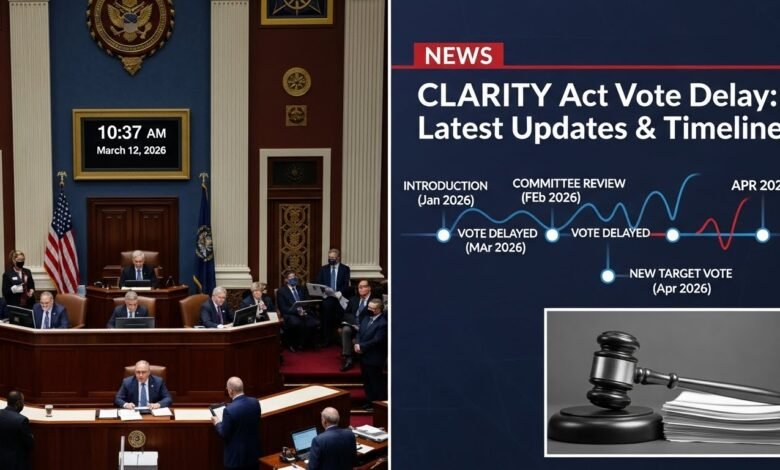
The CLARITY Act Senate vote delay has once again thrown the future of comprehensive cryptocurrency regulation in the United States into uncertainty. As Washington lawmakers continue to grapple with the complexities of digital asset oversight, the postponement of this landmark legislation signals deeper challenges within the Senate’s legislative process. The repeated delays highlight the intricate political dynamics surrounding cryptocurrency regulation and raise questions about when American crypto markets will finally receive the regulatory clarity they desperately need.
Senate Agriculture Committee Chairman John Boozman recently confirmed that his panel would postpone the planned markup of the Digital Asset Market Clarity Act until the final week of January 2026. This announcement represents yet another setback for legislation that industry stakeholders, investors, and crypto advocates have been anticipating for months. The decision to delay came after Senate leaders concluded they lacked sufficient bipartisan support to advance the bill through the committee process without risking a failed vote that could derail the legislation entirely.
CLARITY Act and Its Significance
The CLARITY Act, formerly known as the Digital Asset Market Clarity Act of 2025, represents the most comprehensive attempt to date at establishing a federal regulatory framework for cryptocurrency markets in the United States. The legislation aims to resolve years of regulatory ambiguity by clearly defining which digital assets fall under securities law and which should be classified as commodities.
At its core, the legislation would fundamentally reshape how federal agencies oversee the burgeoning digital asset industry. The Securities and Exchange Commission would maintain jurisdiction over digital assets that meet the definition of securities, while the Commodity Futures Trading Commission would gain expanded authority over assets classified as digital commodities. This jurisdictional clarity is something the industry has been requesting for years, as the current enforcement-driven approach has created significant compliance challenges for crypto businesses.
The bill would also establish federal requirements for market oversight and asset segregation for cryptocurrency exchanges, brokers, and custodians. These standards would replace the current patchwork of state regulations and enforcement actions with a unified national framework. For crypto firms operating across multiple states, this standardization could reduce compliance costs and legal uncertainty significantly.
What’s Behind the CLARITY Act Senate Vote Delay?
First, the treatment of stablecoin rewards has emerged as a significant sticking point. Some legislators worry that allowing crypto platforms to offer rewards on stablecoins could create systemic risks similar to those that triggered previous banking crises. Others argue that restricting stablecoin yields would place American companies at a competitive disadvantage compared to their international counterparts operating in jurisdictions with more permissive frameworks.
Second, the regulatory treatment of decentralized finance platforms has sparked intense debate. Senate Democrats proposed amendments in October 2025 that would classify every DeFi protocol as a digital asset intermediary, requiring them to verify customer identities and adhere to anti-money-laundering regulations. The crypto industry and many Republican lawmakers strongly opposed this approach, arguing it would essentially make it impossible for truly decentralized platforms to operate in the United States. Critics of the DeFi oversight provisions contend that imposing traditional financial intermediary requirements on protocols that lack centralized operators is technically infeasible and would drive innovation offshore.
Third, lawmakers disagree about how regulatory authority should be divided between the SEC and the CFTC. The Banking Committee, which has jurisdiction over the SEC, and the Agriculture Committee, which oversees the CFTC, have competing interests in how crypto oversight is structured. This institutional rivalry has complicated efforts to reach consensus on provisions that would shift regulatory power from one agency to another.
Senate leaders appear particularly wary of forcing a vote without adequate support. A failed or highly partisan markup could weaken the legislation’s prospects later in the year, especially as the legislative calendar becomes increasingly crowded with other priorities. The decision to delay reflects a strategic calculation that additional time for negotiation offers better prospects for eventual passage than rushing to a vote that might collapse in committee.
Timeline and Previous Delays of the CLARITY Act
Understanding the current CLARITY Act Senate vote delay requires examining the legislation’s troubled timeline. The House of Representatives passed its version of the bill in mid-2025 with bipartisan support, creating initial optimism that comprehensive crypto regulation would become law before the year’s end. That optimism has steadily eroded as the Senate has repeatedly postponed action.
The Senate Agriculture Committee had initially planned to hold its markup during the second week of January 2026, alongside a parallel session in the Senate Banking Committee. That coordinated approach was intended to streamline the legislative process and demonstrate unified momentum toward crypto reform. However, as the scheduled date approached, it became clear that neither committee had secured the votes necessary to advance the legislation.
Senator John Kennedy, a member of the Senate Banking Committee, acknowledged that while negotiations have made progress, unresolved issues continue blocking agreement. His candid assessment that the bill is not yet ready for a final vote underscores the significant gaps that remain between Democratic and Republican positions on key provisions.
Chairman Tim Scott of the Senate Banking Committee confirmed the new timeline would push formal committee work into early 2026, though he expressed frustration with what he characterized as Democratic stalling tactics. Scott accused opponents of intentionally delaying the legislation to prevent the Trump administration from positioning America as the crypto capital of the world, a claim that Democratic lawmakers have disputed.
The delay also reflects broader political dynamics beyond the specific provisions of the CLARITY Act. The federal government experienced a record forty-three-day shutdown as Congress struggled to pass appropriations legislation for the 2026 fiscal year. This extended budget crisis consumed significant legislative bandwidth and created scheduling challenges that made moving major legislation like crypto reform more difficult.
Key Provisions of the Digital Asset Market Clarity Act
The bill separates token-based transactions from the Howey Test, the legal standard established by the Supreme Court in 1946 that the SEC, under former Chair Gary Gensler, applied aggressively to crypto assets. Under the CLARITY Act, digital assets that were originally sold as investment contracts would not be permanently classified as securities. Secondary market transactions would be exempt from the investment contract test, addressing a major complaint from the industry about regulatory inconsistency.
The CFTC would receive exclusive regulatory authority over digital commodity transactions, including spot and cash markets that currently exist in a regulatory gray area. Digital commodity exchanges, brokers, and dealers would be required to register with the CFTC and comply with federal standards for market surveillance, customer protection, and operational integrity. These registration requirements would create a clear pathway for crypto businesses to operate legally within a defined regulatory framework.
Token issuers would face new disclosure obligations designed to provide investors with material information about digital assets before purchasing. These requirements would parallel existing securities disclosure rules but would be tailored to the unique characteristics of blockchain-based assets. Trading platforms would need to meet comprehensive registration requirements that address custody, conflicts of interest, and market manipulation risks.
The legislation also includes provisions specifically addressing qualified digital asset custodians, requiring futures commission merchants to use custodians that meet federal standards. This custody framework aims to protect customer assets by imposing segregation requirements and operational controls similar to those that govern traditional financial custodians.
Banking institutions would receive clearer guidance on their ability to custody and facilitate transactions in digital assets, addressing longstanding uncertainty that has prevented many banks from offering crypto-related services. The bill specifies that certain custody activities would be considered financial in nature, making them permissible for federally regulated banks under existing banking law.
Political Dynamics and Partisan Divisions
Republican lawmakers generally favor a lighter regulatory touch that prioritizes innovation and competitiveness. They argue that excessive regulation would drive crypto businesses offshore and cost American jobs while failing to provide meaningful investor protections. This perspective aligns with the crypto industry’s advocacy for clear rules that enable compliant businesses to operate without facing unpredictable enforcement actions.
Democratic lawmakers tend to emphasize investor protection and financial stability concerns. They worry that insufficient regulation could expose retail investors to fraud, manipulation, and losses while creating systemic risks to the broader financial system. The collapse of major crypto firms like FTX has reinforced Democratic skepticism about industry self-regulation and heightened calls for robust oversight.
Senator Elizabeth Warren, the ranking member of the Senate Banking Committee, has emerged as a prominent critic of efforts to loosen crypto regulation. She recently wrote to SEC Chairman Paul Atkins expressing concerns about an executive order allowing pension funds and retirement accounts to gain exposure to crypto assets. Warren warned that crypto volatility and limited transparency could put retirement savings at risk, reflecting broader Democratic anxieties about mainstreaming digital assets before adequate protections exist.
The partisan divide extends to questions about which regulatory agency should have primary authority over crypto markets. Democrats generally trust the SEC, which has a strong investor protection mandate and a history of aggressive enforcement. Republicans often prefer empowering the CFTC, which has traditionally taken a more industry-friendly approach and has expertise in derivatives and commodity markets.
These political dynamics mean that achieving the bipartisan support necessary to pass the CLARITY Act requires compromise on provisions that both parties consider important. Finding that middle ground has proven elusive, contributing to the repeated delays.
Impact on Crypto Markets and Industry Response
Crypto-native companies face ongoing challenges in planning long-term business strategies when fundamental regulatory questions remain unresolved. Decisions about which markets to serve, which products to offer, and how to structure operations all depend on understanding the regulatory landscape. Without the clarity that passage of the CLARITY Act would provide, many firms have adopted a wait-and-see approach that limits growth and innovation.
Market analysts note that prediction markets have reacted negatively to news of the latest delay. Polymarket odds on the CLARITY Act passing in 2026 collapsed following Chairman Boozman’s announcement, reflecting skepticism about whether Congress can overcome the obstacles that have repeatedly stalled progress. This pessimism has contributed to volatility in crypto asset prices as traders price in extended regulatory uncertainty.
Some industry observers have suggested that the delays might actually benefit certain stakeholders who prefer operating in the current relatively permissive environment. Without clear federal rules, crypto businesses have greater flexibility in how they structure products and services, though they also face greater legal risk from enforcement actions. The passage of comprehensive legislation would create winners and losers as previously ambiguous activities become clearly legal or clearly prohibited.
International competitiveness concerns have become more prominent as other jurisdictions move forward with crypto regulatory frameworks. The European Union implemented its Markets in Crypto-Assets regulation, providing the kind of comprehensive rulebook that the United States lacks. Some American crypto companies have established or expanded operations in jurisdictions with clearer regulatory regimes, a trend that could accelerate if the CLARITY Act Senate vote delay extends much longer.
What Happens Next for the CLARITY Act?
The White House has signaled support for crypto regulatory reform, with President Trump’s Council of Advisors for Digital Assets indicating that progress continues behind the scenes. Patrick Witt, the executive director of the council, suggested at a recent conference that work on the legislation has not stalled as dramatically as public perception might suggest. This executive branch engagement could help push reluctant senators toward compromise, though the administration’s influence over Senate procedures is limited.
Multiple scenarios could play out from here. First, negotiators might reach a compromise on contentious provisions like DeFi oversight and custody standards, enabling quick passage in early 2026. This best-case scenario would require both parties to make significant concessions on issues they consider important, but it would provide the regulatory clarity that markets desperately want.
Second, lawmakers might pursue separate legislation for different categories of digital assets rather than trying to address everything in one comprehensive bill. The GENIUS Act for stablecoins already passed with broad bipartisan support and was signed into law, demonstrating that narrower legislation can succeed where comprehensive reform struggles. A similar approach for other asset classes could prove more politically feasible than the all-encompassing CLARITY Act.
Third, the legislation could stall indefinitely as political disagreements prove impossible to overcome. This worst-case scenario would leave crypto regulation in its current state of uncertainty, with enforcement actions and court decisions continuing to establish precedents on an ad hoc basis. Such an outcome would likely accelerate the migration of crypto businesses to jurisdictions with clearer regulatory frameworks.
International Context and Competitive Implications
The United Kingdom has pursued its own approach to crypto regulation, focusing on bringing digital assets within existing financial services frameworks while creating bespoke rules where necessary. British regulators have emphasized a principles-based approach that aims to be flexible and innovation-friendly while still providing meaningful oversight. Singapore has similarly worked to position itself as a crypto-friendly jurisdiction with clear rules and sophisticated regulatory infrastructure.
These international developments create competitive pressures on American policymakers. If the CLARITY Act Senate vote delay extends significantly, more American crypto companies might relocate operations to jurisdictions with established regulatory frameworks. Such relocation decisions often involve not just moving corporate headquarters but also shifting highly skilled jobs, tax revenues, and innovation capacity to other countries.
Some lawmakers have invoked these competitive dynamics in arguing for the swift passage of comprehensive crypto legislation. They contend that America risks losing its traditional position as the global center of financial innovation if it cannot provide the regulatory clarity that crypto businesses need to plan and grow. This competitiveness argument has garnered some bipartisan support, as both Democrats and Republicans generally agree that American economic leadership is important.
However, other lawmakers push back against the notion that America must race to establish crypto regulations before other countries. They argue that taking time to get the rules right is more important than being first, particularly given the consumer protection concerns and financial stability risks that have emerged in crypto markets. From this perspective, the CLARITY Act Senate vote delay represents appropriate caution rather than problematic slowness.
Expert Perspectives and Industry Commentary
Legal experts emphasize that the extended delays create ongoing challenges for crypto businesses trying to maintain compliance with unclear rules. Without definitive guidance on which assets are securities and which are commodities, companies must make judgment calls that expose them to potential enforcement risk. This regulatory uncertainty acts as a drag on innovation and investment in the American crypto sector.
Consumer protection advocates have generally supported more time for deliberation, arguing that rushing to pass the CLARITY Act without adequate safeguards could expose retail investors to significant risks. They point to the numerous scandals, frauds, and failures that have plagued crypto markets as evidence that robust oversight is essential before digital assets become more deeply integrated into the mainstream financial system.
Some regulatory scholars suggest that the difficulty in passing comprehensive crypto legislation reflects deeper questions about whether the existing securities and commodities law framework is well-suited to digital assets. They argue that crypto’s unique characteristics might require entirely new regulatory categories and approaches rather than trying to fit blockchain-based assets into legal frameworks designed for traditional financial instruments.
International observers note that America’s legislative challenges with crypto regulation mirror similar difficulties in other democracies trying to balance innovation, consumer protection, and financial stability. The European Union took years to develop and implement its Markets in Crypto-Assets regulation, and other jurisdictions have also experienced delays and setbacks. This suggests that creating effective crypto regulation is inherently difficult rather than being primarily a function of American political dysfunction.
Implications for Retail Investors and Crypto Users
Tax reporting requirements remain complex and potentially inconsistent across different types of crypto activities. While the Internal Revenue Service has issued some guidance on crypto taxation, many edge cases and novel transaction types lack clear treatment. The passage of the CLARITY Act could help resolve some of these ambiguities by establishing clearer legal classifications for different categories of digital assets, which could then inform tax treatment.
Consumer protections available to crypto users vary significantly depending on which platforms and services they use. Unlike traditional financial services, crypto businesses often do not provide the kinds of account insurance and regulatory protections that bank customers take for granted. The CLARITY Act would establish minimum standards for licensed platforms, potentially providing retail users with greater confidence that their assets are protected.
Access to crypto services could change significantly once comprehensive regulation takes effect. Some smaller platforms might exit the market if compliance costs prove too burdensome, potentially reducing competition and choice for consumers. Conversely, the regulatory clarity could encourage major traditional financial institutions to enter the market, increasing access to crypto services for mainstream investors who prefer working with established brands.
Educational needs remain high as retail investors try to navigate the evolving crypto landscape. The continued CLARITY Act Senate vote delay extends the period during which potential investors must make decisions without clear regulatory guideposts. This increases the importance of independent research and caution, as the legal and financial risks associated with different crypto activities remain somewhat unclear.
The Path Forward for Crypto Regulation
Looking beyond the immediate CLARITY Act Senate vote delay, the broader trajectory of crypto regulation in America remains a subject of intense debate and uncertainty. Several possible scenarios could unfold depending on how political dynamics evolve and whether lawmakers can overcome their differences.
If negotiators successfully bridge partisan divides, comprehensive crypto legislation could still pass in early 2026, providing the industry with long-awaited regulatory clarity. This outcome would require compromise from both parties on contentious issues like DeFi oversight and the SEC-CFTC jurisdictional split. The willingness of key senators to make such compromises will determine whether this optimistic scenario materializes.
Alternatively, lawmakers might abandon efforts at comprehensive reform in favor of incremental approaches that address specific aspects of crypto regulation separately. The successful passage of the GENIUS Act for stablecoins demonstrates that narrower legislation can attract broader support than comprehensive bills that try to address everything at once. Following this model for other categories of digital assets could prove more politically feasible.
Regulatory agencies could continue filling the void left by legislative inaction through enforcement actions and interpretive guidance. This approach has significant limitations, as agencies operating without clear statutory authority face legal challenges and cannot provide the comprehensive framework that legislation could establish. However, in the absence of congressional action, agencies may continue pursuing this strategy.
Court decisions will likely continue shaping crypto regulation regardless of what Congress does. Multiple ongoing cases involving major crypto companies and regulatory agencies will establish precedents that clarify legal questions about digital asset classification and oversight. These judicial developments could either support or undermine the regulatory approaches contemplated in the CLARITY Act, depending on how courts interpret existing law.
Conclusion
The persistent CLARITY Act Senate vote delay represents more than just another congressional postponement. It reflects fundamental questions about how America will integrate transformative blockchain technology into its financial system while protecting consumers and maintaining market integrity. The difficulty lawmakers face in reaching consensus on crypto regulation illustrates the complex tradeoffs between innovation and oversight that characterize emerging technology policy.
As the rescheduled markup approaches in late January 2026, stakeholders across the crypto ecosystem will be watching closely to see whether Senate committees can finally advance legislation that has been years in the making. The outcome will shape not just crypto regulation but also America’s broader positioning in the global digital economy.
Whether you are an investor trying to navigate crypto markets, a business building on blockchain technology, or simply someone interested in financial innovation, the resolution of the CLARITY Act Senate vote delay will have lasting implications. Stay informed about developments in crypto legislation by following official Senate committee updates and engaging with reliable sources that track regulatory progress.
The time for comprehensive crypto regulation has arrived, but whether American lawmakers can deliver remains an open question. The coming weeks will reveal whether the latest CLARITY Act Senate vote delay represents a final refinement period before passage or another chapter in an ongoing saga of missed opportunities and legislative gridlock. One thing is certain: the need for clarity has never been more urgent as digital assets continue their inexorable integration into the global financial system.
