
Swiss City Pay With Bitcoin: Lugano’s Crypto Revolution
Discover the Swiss city pay with bitcoin revolution in Lugano. Learn how this innovative city accepts cryptocurrency for taxes, goods, and services.

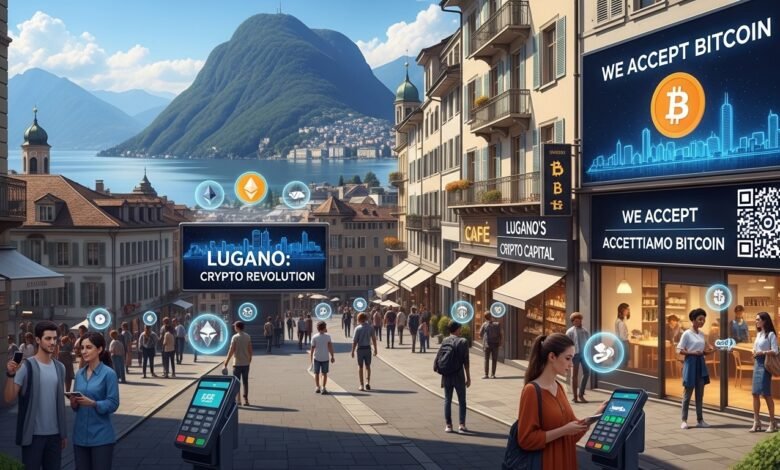
Imagine walking into a coffee shop, buying groceries, or even paying your municipal taxes with bitcoin. This isn’t a futuristic fantasy—it’s the everyday reality in Lugano, the Swiss city pay with bitcoin initiatives have transformed into Europe’s most cryptocurrency-friendly destination. Nestled in the Italian-speaking canton of Ticino, this picturesque lakeside city has embraced digital currency with unprecedented enthusiasm, creating a living laboratory for the future of money. While most cities around the world continue debating the merits of cryptocurrency, Lugano has boldly stepped forward to demonstrate how bitcoin payments can integrate seamlessly into traditional financial systems, offering residents and visitors alike the freedom to transact with digital assets as easily as they would with Swiss francs.
How Lugano Became Europe’s Bitcoin Capital
The transformation of Lugano into a cryptocurrency-friendly city didn’t happen overnight. In March 2022, the city government announced an ambitious partnership with Tether, the company behind the USDT stablecoin, launching the “Plan ₿” initiative. This groundbreaking collaboration aimed to position Lugano as a European hub for blockchain technology and cryptocurrency adoption, fundamentally changing how citizens interact with digital money.
The city’s mayor, Michele Foletti, recognized that Switzerland’s reputation for financial innovation and banking excellence created the perfect environment for bitcoin adoption. Rather than waiting for federal regulations to catch up with technological advancement, Lugano took a proactive approach, creating infrastructure that would allow cryptocurrency payments to flourish within existing legal frameworks.
This strategic decision wasn’t merely about adopting trendy technology. The city government understood that becoming a Swiss city pay with bitcoin destination could attract talented professionals, innovative businesses, and forward-thinking investors who value financial sovereignty and technological progress. The initiative represented a calculated bet on the future of finance, one that would either position Lugano at the forefront of economic innovation or serve as a cautionary tale about premature adoption.
Lugano’s Cryptocurrency Infrastructure
The Plan ₿ initiative forms the backbone of Lugano’s cryptocurrency ecosystem, creating comprehensive infrastructure that makes bitcoin payments practical for everyday transactions. At its core, the program recognizes bitcoin, Tether’s USDT stablecoin, and the Lugano-specific LVGA token as legal tender alongside the Swiss franc, giving these digital currencies the same status as traditional money within city limits.
This recognition extends far beyond symbolic gestures. The city government invested approximately three million Swiss francs into developing payment infrastructure, merchant onboarding programs, and educational initiatives designed to help residents and businesses navigate the transition to digital currency acceptance. This financial commitment demonstrated genuine dedication rather than superficial marketing.
The technical infrastructure supporting cryptocurrency transactions in Lugano relies on both established blockchain networks and innovative payment processors. Merchants accepting bitcoin utilize point-of-sale systems that instantly convert cryptocurrency into Swiss francs if desired, eliminating the volatility concerns that typically discourage business adoption. This conversion happens seamlessly in the background, allowing merchants to maintain traditional accounting practices while offering customers the flexibility to pay with digital assets.
For residents looking to pay with bitcoin for municipal services, the city developed dedicated platforms that handle tax payments, parking fees, and various administrative charges. These systems integrate with existing government databases, ensuring that cryptocurrency payments receive the same processing and record-keeping standards as conventional transactions.
Paying Taxes With Bitcoin: A Revolutionary Municipal Service
Perhaps the most revolutionary aspect of Lugano’s cryptocurrency adoption involves the ability to pay municipal taxes with bitcoin. This service extends beyond novelty, representing a fundamental reimagining of how governments can interact with digital finance. Citizens can settle tax obligations up to 250,000 Swiss francs annually using bitcoin or other accepted cryptocurrencies, a threshold high enough to accommodate substantial property taxes and business levies.
The process of paying taxes with cryptocurrency follows a straightforward procedure. Taxpayers access a dedicated portal where they select the cryptocurrency payment option, receive a wallet address or QR code specific to their tax account, and transfer the appropriate amount of bitcoin or other accepted digital currency. The system calculates the exact amount based on real-time exchange rates, adding a small conversion spread to account for market fluctuations between transaction initiation and confirmation.
This government acceptance of bitcoin payments required significant backend development. The city partnered with Swiss financial institutions and cryptocurrency service providers to create compliant processing systems that satisfy both banking regulations and cryptocurrency security requirements. Each transaction undergoes anti-money-laundering checks and gets recorded in both traditional government accounting systems and on the relevant blockchain, creating redundant verification trails.
The symbolic importance of governments accepting cryptocurrency cannot be overstated. When a Swiss municipality—a jurisdiction known for financial conservatism and regulatory rigor—embraces bitcoin for tax collection, it signals legitimacy that transcends the enthusiasm of cryptocurrency advocates. This endorsement from traditional authority structures helps bridge the gap between conventional finance and digital innovation.
Merchants and Businesses Accepting Bitcoin in Lugano
The Swiss city pay with bitcoin ecosystem extends far beyond government services into the commercial sector, where hundreds of merchants now accept cryptocurrency payments. From restaurants and hotels to retail shops and professional services, businesses throughout Lugano have integrated bitcoin acceptance into their payment options, creating an environment where digital currency functions as practical money rather than speculative investment.
Major retailers participating in the initiative include supermarkets, clothing stores, electronics shops, and pharmacies—establishments that handle everyday consumer needs rather than niche luxury goods. This breadth of merchant participation ensures that residents who choose to transact with bitcoin can actually live on cryptocurrency without constantly converting back to traditional currency.
The hospitality industry in Lugano has particularly embraced cryptocurrency payments. Luxury hotels along Lake Lugano accept bitcoin for room bookings, dining, and spa services, attracting cryptocurrency enthusiasts who appreciate the ability to travel and spend digital assets directly. These establishments understand that accepting bitcoin differentiates them in a competitive tourism market while appealing to a financially sophisticated clientele.
Small businesses and independent merchants also participate actively in the cryptocurrency economy. Coffee shops, artisan boutiques, and local service providers recognize that offering bitcoin payment options costs relatively little while potentially attracting customers who specifically seek out crypto-friendly establishments. The city’s merchant onboarding programs provide free point-of-sale equipment and training, removing traditional barriers to cryptocurrency adoption.
Professional services including legal firms, consulting agencies, and medical practices have also joined the bitcoin payment network. These high-value service providers appreciate the lower transaction fees compared to credit card processing and the finality of cryptocurrency transactions, which eliminate chargeback risks common with traditional payment methods.
The Technology Behind Seamless Bitcoin Payments
The technical infrastructure enabling smooth bitcoin transactions throughout Lugano combines established blockchain technology with innovative payment processing solutions. Understanding this technology helps explain how the Swiss city pay with bitcoin model overcomes traditional challenges associated with cryptocurrency commerce.
Bitcoin payments in Lugano primarily utilize the Lightning Network, a second-layer protocol built on top of the Bitcoin blockchain that enables near-instant transactions with minimal fees. Traditional Bitcoin transactions can take minutes to confirm and carry fees that make small purchases impractical. The Lightning Network solves these problems by creating payment channels between users, allowing thousands of transactions to occur off-chain before settlement on the main blockchain.
For merchants, point-of-sale systems integrate with cryptocurrency payment processors that handle the technical complexity. When a customer chooses to pay with bitcoin, the system generates a QR code or payment request through the Lightning Network. The customer scans this code with their bitcoin wallet, approves the transaction, and receives confirmation within seconds. The entire process mirrors the convenience of contactless credit card payments while leveraging blockchain technology.
Many merchants opt for instant conversion services that exchange received bitcoin for Swiss francs immediately, eliminating exposure to price volatility. These conversion services charge fees typically lower than credit card processing rates, making cryptocurrency acceptance economically attractive even for businesses unconcerned with holding digital assets long-term.
The city government supports this infrastructure through partnerships with Swiss-based cryptocurrency companies that comply with the country’s stringent financial regulations. This regulatory compliance ensures that bitcoin payments in Lugano meet the same security, transparency, and consumer protection standards as traditional financial services.
Living on Bitcoin: Resident Experiences in Lugano
The true test of whether Lugano has become a genuine Swiss city pay with bitcoin destination lies in the experiences of residents who attempt to conduct substantial portions of their financial lives using cryptocurrency. Several early adopters have documented their experiences living primarily on bitcoin within city limits, providing insights into both the possibilities and current limitations.
These cryptocurrency enthusiasts report that basic necessities—groceries, utilities, transportation, dining, and entertainment—can generally be purchased with bitcoin or other accepted digital currencies. The density of participating merchants in central Lugano creates pockets where someone could conceivably go days without needing traditional currency. This represents remarkable progress compared to most global cities where bitcoin acceptance remains scattered and unreliable.
However, residents also note gaps in the cryptocurrency payment network. Certain services including some healthcare providers, insurance companies, and specialized professional services still operate exclusively in Swiss francs. While the city government accepts bitcoin for taxes, federal tax obligations must still be paid in traditional currency. These limitations remind users that Lugano’s bitcoin ecosystem exists within a broader national framework that hasn’t fully embraced cryptocurrency.
The psychological experience of paying with bitcoin for everyday purchases varies among residents. Some describe liberation from traditional banking systems and appreciation for the transparency of blockchain transactions. Others find the need to manage private keys, monitor exchange rates, and maintain adequate wallet balances more cumbersome than traditional banking, especially when most of their income still arrives in Swiss francs.
Younger residents and technology professionals express the strongest enthusiasm for Lugano’s cryptocurrency infrastructure, viewing it as both practical and symbolic. For these demographics, the ability to transact with bitcoin represents alignment between technological values and daily life, reinforcing their decision to live in a city that embraces innovation.
Economic Impact and Business Attraction
Several cryptocurrency-focused businesses have established headquarters or significant operations in Lugano specifically because of Plan ₿ and the supportive regulatory environment. These companies bring high-skilled jobs, tax revenue, and international connections that enhance the city’s economic diversity. The clustering effect creates a virtuous cycle where the presence of blockchain companies attracts talent, which in turn attracts more companies seeking access to that talent pool.
Tourism focused on cryptocurrency adoption represents another economic benefit. Lugano has become a pilgrimage site for bitcoin enthusiasts curious to experience a city where digital currency functions as genuine money. These visitors typically belong to affluent demographics interested in financial technology, making them valuable to the local hospitality and retail sectors. Some businesses report that cryptocurrency-paying customers spend more on average than traditional tourists, though this correlation may reflect affluence rather than payment method.
Real estate markets have shown interesting responses to Lugano’s cryptocurrency-friendly status. Property developers and real estate agencies increasingly accept bitcoin for transactions, and some market observers note increased interest from international buyers seeking residency in a jurisdiction that understands digital assets. While Switzerland’s overall property market strength makes isolating bitcoin’s specific impact difficult, real estate professionals credit the city’s innovative reputation with attracting a particular type of international buyer.
Critics argue that the economic benefits remain modest relative to the infrastructure investment and that much of the activity represents relocation of existing cryptocurrency industry rather than genuine economic growth. They point out that bitcoin payment volume remains small compared to traditional transactions and question whether the initiative will prove sustainable if cryptocurrency markets face extended downturns.
Challenges and Criticisms of Bitcoin Adoption
Cryptocurrency volatility remains the most persistent challenge. While the Lightning Network enables fast transactions and merchant conversion services minimize exposure, bitcoin’s price fluctuations create complications for accounting, budgeting, and long-term planning. Businesses accepting bitcoin must implement systems to handle price swings that can occur between transaction and settlement, adding administrative complexity.
Regulatory uncertainty beyond Lugano’s borders complicates the cryptocurrency ecosystem. While the city government enthusiastically supports bitcoin payments, federal Swiss regulations and European Union financial directives continue evolving. Businesses and residents operating in the cryptocurrency space must navigate changing compliance requirements, taxation rules, and reporting obligations that sometimes conflict with the decentralized ethos that attracted them to bitcoin initially.
Consumer protection concerns arise when irreversible cryptocurrency transactions replace traditional payment methods with buyer protection mechanisms. Unlike credit card purchases that can be disputed and refunded, bitcoin payments offer no recourse if merchants fail to deliver promised goods or services. This finality advantages merchants but potentially disadvantages consumers accustomed to chargeback rights.
Environmental criticisms of Bitcoin’s proof-of-work consensus mechanism persist despite Lugano’s Lightning Network emphasis. Critics argue that promoting bitcoin adoption indirectly supports a network with substantial electricity consumption and carbon emissions. While supporters counter that renewable energy increasingly powers Bitcoin mining and that traditional banking systems also consume vast resources, environmental concerns remain politically sensitive in Switzerland’s environmentally-conscious culture.
Technical barriers prevent many potential users from participating in the cryptocurrency economy. Understanding wallet security, managing private keys, navigating blockchain confirmations, and troubleshooting transaction failures requires technical sophistication beyond what typical consumers possess. While user interfaces improve continuously, bitcoin payments remain more complex than tapping a credit card, limiting adoption among less tech-savvy demographics.
Comparing Lugano to Other Crypto-Friendly Cities Worldwide
Lugano’s achievement as a Swiss city pay with bitcoin destination gains context when compared to other global cities attempting similar cryptocurrency integration. Several jurisdictions worldwide have experimented with bitcoin adoption, each offering lessons about what works, what doesn’t, and what factors determine success.
El Salvador made international headlines by declaring bitcoin legal tender nationwide in 2021, a far more ambitious undertaking than Lugano’s city-level initiative. However, implementation challenges, technical difficulties, and public resistance revealed that government mandate alone cannot create genuine cryptocurrency adoption. Lugano’s voluntary, infrastructure-focused approach has arguably achieved more practical usage despite smaller scale.
Miami, Florida has aggressively courted cryptocurrency businesses and promotes itself as a bitcoin-friendly destination. Mayor Francis Suarez has advocated for municipal bitcoin holdings and welcomed blockchain companies, though actual merchant acceptance and practical cryptocurrency payment options lag behind Lugano’s comprehensive implementation. Miami’s approach emphasizes attracting industry rather than enabling daily transactions.
Zug, Switzerland—often called “Crypto Valley”—represents Lugano’s closest domestic competitor. This small city pioneered bitcoin tax payments and attracted numerous blockchain companies years before Lugano’s Plan ₿. However, Zug’s merchant acceptance network remains smaller, and the city has focused more on providing business infrastructure than consumer payment options, creating a different type of cryptocurrency ecosystem.
Portugal, particularly Lisbon, has attracted cryptocurrency professionals through favorable tax treatment of digital asset gains, though practical bitcoin payment infrastructure remains limited. This demonstrates that regulatory friendliness alone doesn’t translate to merchant adoption without complementary infrastructure investment.
Lugano distinguishes itself through comprehensive government support, merchant density, and practical infrastructure that enables actual cryptocurrency payments for diverse goods and services. The combination of official recognition, business incentives, and technical systems creates an environment where paying with bitcoin functions as genuinely viable rather than merely theoretically possible.
The Future of Bitcoin Payments in Switzerland and Beyond
Switzerland’s federal government watches Lugano’s cryptocurrency adoption carefully as a real-world laboratory for understanding benefits and risks. If the city demonstrates sustainable economic growth, manageable regulatory challenges, and genuine user satisfaction, broader Swiss acceptance might follow. Several other Swiss municipalities have expressed interest in similar programs, suggesting potential expansion if Lugano’s model proves successful.
Technological improvements in blockchain technology and cryptocurrency payment systems will likely determine long-term viability. As the Lightning Network matures, user interfaces simplify, and wallet security strengthens, barriers preventing mainstream bitcoin adoption should diminish. Conversely, if technical challenges persist and user experience fails to match traditional payment methods, enthusiasm may wane regardless of government support.
The evolution of central bank digital currencies (CBDCs) represents both competition and potential complement to bitcoin payments. If Switzerland develops a digital franc, it might reduce demand for cryptocurrency alternatives while simultaneously normalizing digital money concepts that could benefit bitcoin in unexpected ways. How these systems coexist or compete will significantly impact cities like Lugano.
Regulatory developments at European and international levels will constrain or enable expansion of the cryptocurrency payment model. Stricter regulations might force Lugano to scale back certain initiatives, while regulatory clarity and supportive frameworks could accelerate adoption. The city’s experience provides valuable data to inform these policy decisions.
Ultimately, Lugano’s legacy as a Swiss city pay with bitcoin pioneer may lie less in widespread cryptocurrency adoption and more in demonstrating that digital currency can function alongside traditional finance in well-regulated, prosperous jurisdictions. This proof of concept challenges assumptions that bitcoin appeals only to libertarians seeking to escape government oversight, showing instead that innovative governments can embrace cryptocurrency while maintaining order and consumer protection.
Conclusion
Lugano stands as the most comprehensive example of a Swiss city pay with bitcoin destination, transforming from a picturesque lakeside town into a living laboratory for cryptocurrency integration. Through Plan ₿ and substantial infrastructure investment, the city has created an environment where bitcoin payments function for everyday transactions, municipal taxes, and business operations, demonstrating that digital currency can coexist with traditional finance in practical, user-friendly ways.
While challenges remain and critics question long-term sustainability, Lugano’s achievement cannot be dismissed. Hundreds of merchants accept cryptocurrency, residents successfully conduct substantial portions of their financial lives using bitcoin, and the city has attracted talent and businesses specifically because of its innovative approach. These tangible outcomes exceed what most cryptocurrency advocates dared hope cities would accomplish just years ago.
Whether you’re a bitcoin enthusiast planning to visit this groundbreaking destination, a business owner considering cryptocurrency acceptance, or simply someone curious about digital currency’s future, Lugano offers valuable lessons. The city proves that with proper infrastructure, government support, and community buy-in, paying with bitcoin can transition from speculative fantasy to practical reality.
If you’re interested in experiencing the future of money firsthand, consider visiting Lugano to witness how this innovative Swiss city pay with bitcoin initiative is reshaping our understanding of what currency can be. The revolution is already here—it’s just being tested in the beautiful lakeside setting of Switzerland’s most forward-thinking city.
See more;Swiss City Bitcoin Payment: Lugano’s Crypto Revolution
