
Crypto Market Down Today: $400M Liquidations After Fed Remarks
Discover why the crypto market is down today with $400M in liquidations following the Fed's hawkish stance. Analysis of Bitcoin and Ethereum drops.

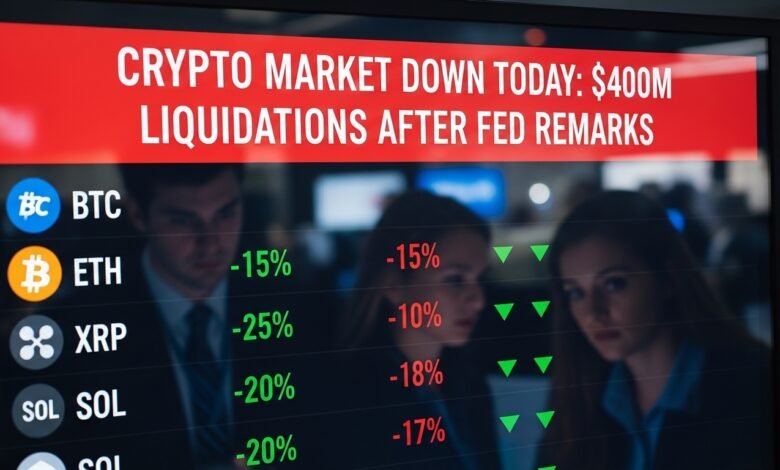
why the crypto market is down today, the answer lies in a perfect storm of Federal Reserve policy signals and cascading liquidations that wiped out over $400 million in leveraged positions. This dramatic market movement has sent shockwaves through the digital asset ecosystem, with Bitcoin, Ethereum, and altcoins all experiencing sharp declines that have rattled both retail and institutional investors alike.
Understanding the mechanics behind today’s crypto market downturn requires examining the intricate relationship between traditional monetary policy and digital asset valuations. The Federal Reserve’s recent hawkish commentary has reignited concerns about prolonged high interest rates, creating an environment where risk assets, particularly cryptocurrencies, face increased selling pressure. As traders digest these macroeconomic headwinds, the resulting panic has triggered automated liquidations across major exchanges, amplifying the downward momentum and creating what many analysts are calling one of the most significant single-day corrections in recent months.
Why the Crypto Market is Down Today
The current crypto market crash represents more than just typical volatility. When Federal Reserve officials signal their commitment to maintaining restrictive monetary policy, it fundamentally alters the risk calculus for cryptocurrency investments. Higher interest rates make traditional savings vehicles more attractive compared to speculative assets, prompting a rotation away from digital currencies toward safer, yield-bearing instruments.
On November 3, the cryptocurrency market capitalization shed billions of dollars within hours as selling pressure intensified across all major tokens. Bitcoin’s price decline led the market lower, dropping below critical support levels that technical analysts had been monitoring for weeks. Ethereum followed suit, with its value tumbling as investors questioned the sustainability of recent gains amid tightening financial conditions.
The cryptocurrency liquidations that followed were particularly brutal for leveraged traders. When prices fall rapidly, exchanges automatically close leveraged positions that can no longer meet margin requirements. This creates a cascading effect where forced selling begets more selling, accelerating the downward spiral. The $400 million figure represents the total value of these forced closures, affecting thousands of traders who had bet on continued upward momentum.
Federal Reserve’s Hawkish Stance Triggers Market Anxiety
The Federal Reserve policy impact on cryptocurrency markets cannot be overstated. During recent public appearances and policy statements, Fed officials emphasized their determination to bring inflation under control, even if it means maintaining elevated interest rates for an extended period. This hawkish rhetoric directly contradicts the loose monetary conditions that previously fueled the explosive growth in crypto valuations during the pandemic era.
Central bank messaging has evolved significantly over the past year. Where investors once anticipated imminent rate cuts, they now face the reality of rates remaining higher for longer. This shift in expectations has profound implications for digital asset valuation, as cryptocurrencies typically thrive in low-rate environments where traditional yields are suppressed and investors seek alternative stores of value.
The market’s reaction to these hawkish signals demonstrates the deep interconnection between traditional finance and the cryptocurrency ecosystem. Despite Bitcoin’s original design as a decentralized alternative to fiat currency, its price action increasingly correlates with traditional risk assets like technology stocks. When the Fed tightens monetary policy, both equity markets and crypto prices tend to suffer simultaneously.
Professional traders had positioned themselves for potential rate relief, building leveraged long positions that assumed continued market support. The Fed’s firm stance shattered these expectations, triggering widespread stop-loss orders and margin calls that contributed to today’s dramatic selloff. Understanding this dynamic is crucial for anyone trying to comprehend why cryptocurrency is falling during this particular moment.
Bitcoin and Ethereum Lead the Decline
Bitcoin price analysis reveals a technical breakdown that has concerned market participants. The leading cryptocurrency breached several key support zones, including psychological price levels that had previously held during minor corrections. Trading volume surged as the selling accelerated, indicating genuine distribution rather than mere profit-taking.
The Bitcoin market correction has been particularly severe for those who entered positions during the recent rally. Many retail investors who bought near local highs now find themselves underwater, facing difficult decisions about whether to hold through the volatility or cut losses. Institutional holders, meanwhile, have shown mixed responses, with some viewing the dip as a buying opportunity while others reduce exposure to manage portfolio risk.
Ethereum price decline has mirrored Bitcoin’s weakness, though with some unique characteristics. As the backbone of decentralized finance and the broader smart contract ecosystem, Ethereum’s value proposition extends beyond simple store-of-value narratives. However, this hasn’t insulated it from today’s selling pressure, as risk-off sentiment dominates across all crypto categories.
The correlation between Bitcoin and Ethereum during this downturn highlights how market-wide fear overwhelms individual token fundamentals. Even projects with strong development activity and genuine utility have been caught in the broad-based selloff, demonstrating that macroeconomic factors currently trump microeconomic considerations.
Layer-two solutions and Ethereum-based protocols have experienced even steeper declines, as investors flee to relative safety. The entire altcoin market crash has been indiscriminate, with both established projects and newer tokens suffering double-digit percentage losses. This broad-based weakness suggests systemic concerns rather than project-specific issues.
The Anatomy of $400 Million in Crypto Liquidations
Cryptocurrency liquidations occur when leveraged positions become untenable. Traders who borrow funds to amplify their market exposure face automatic closure of their positions when the market moves against them beyond a certain threshold. The $400 million liquidation figure represents the aggregate value of these forced sales across major exchanges.
The leverage trading risks that materialized today serve as a harsh reminder of cryptocurrency market volatility. While leverage can magnify gains during uptrends, it equally amplifies losses during corrections. Many traders who were comfortably profitable just hours earlier found their positions completely wiped out as the market cascaded lower.
Exchange data reveals that both long and short positions faced liquidations, though long liquidations dominated. This indicates that most traders had been positioned for continued upside, making them vulnerable when the Fed’s hawkish comments reversed market sentiment. The concentration of liquidations occurred in specific price zones where large clusters of leveraged positions had accumulated.
The cascading liquidations effect creates a self-reinforcing cycle. Initial selling pressure triggers the first wave of margin calls, which forces additional selling, which triggers more margin calls, and so on. This dynamic can temporarily disconnect prices from fundamental values, creating opportunities for nimble traders while devastating those caught on the wrong side.
Understanding margin calls in crypto requires recognizing how exchange mechanisms differ from traditional markets. Cryptocurrency exchanges typically offer extremely high leverage ratios, sometimes twenty times or more. While this enables significant potential returns, it also means that relatively small price movements can eliminate entire positions instantly.
Broader Cryptocurrency Market Sentiment Analysis
The crypto market sentiment has shifted dramatically from the optimism that characterized recent weeks. Fear and greed indices, which track investor emotions through various metrics, have swung decisively toward fear. Social media activity reflects this anxiety, with discussions dominated by concerns about further downside rather than bullish projections.
Investor panic manifests in several observable ways beyond just price action. Trading volumes spike as holders rush to exit positions, order books thin out as liquidity providers withdraw, and volatility measures surge to elevated levels. These technical indicators paint a picture of a market gripped by uncertainty and risk aversion.
The risk-off sentiment extends beyond cryptocurrencies into traditional markets as well. When investors become concerned about economic conditions or policy direction, they typically reduce exposure to volatile assets across all categories. This creates challenging conditions for cryptocurrency adoption, as mainstream investors view digital assets as too risky during uncertain times.
Professional market participants have responded by adjusting their positioning and risk management approaches. Hedge funds that maintain cryptocurrency exposure have reportedly reduced leverage and increased hedging activities. Institutional investors have paused accumulation programs pending greater clarity about macroeconomic direction and regulatory developments.
Technical Analysis of Today’s Market Movement
From a technical perspective, the crypto market downturn has broken several important chart patterns. Bitcoin’s decline through critical moving averages suggests potential for continued weakness unless buyers can reclaim these levels quickly. The breakdown has activated numerous technical sell signals that algorithmic trading systems follow.
Cryptocurrency trading volumes have surged to levels not seen since previous major corrections. High volume during declines typically indicates genuine distribution rather than temporary weakness, suggesting that significant holders are actively reducing positions. This selling pressure from larger participants can persist for extended periods.
The market volatility observed today represents standard deviation moves that exceed normal ranges. While cryptocurrency markets are inherently volatile, today’s price swings have been exceptional even by crypto standards. This extreme volatility discourages new capital from entering and encourages existing holders to reduce exposure.
Support and resistance levels that previously guided trading decisions have been decisively broken. Technical analysts are now reassessing their frameworks and identifying new zones where buyers might potentially emerge. The Bitcoin support levels that traders had relied upon have proven inadequate against today’s selling pressure.
Historical Context of Fed-Driven Crypto Selloffs
Today’s events are not unprecedented. Previous instances of Federal Reserve tightening have similarly impacted cryptocurrency valuations. Looking back at 2022, when the Fed began its aggressive rate hiking campaign, cryptocurrencies entered a prolonged bear market that erased trillions in value. The parallels to that period are concerning for current holders.
The cryptocurrency bear market dynamics that emerge during Fed tightening cycles follow predictable patterns. Initial optimism gives way to reality as higher rates make their impact felt. Leveraged positions unwind, speculative projects collapse, and only the strongest protocols survive. Understanding this historical context helps frame current events.
However, important differences exist between today’s situation and previous cycles. The cryptocurrency ecosystem has matured significantly, with greater institutional participation, clearer regulatory frameworks in some jurisdictions, and improved infrastructure. These developments may moderate the severity of the current correction compared to past episodes.
Crypto market cycles have historically followed Bitcoin’s halving schedule and broader economic conditions. The interplay between these factors creates complex dynamics that challenge even experienced analysts. Today’s decline occurs against a backdrop of ongoing technological development and growing real-world cryptocurrency utility.
Impact on Decentralized Finance and Altcoins
The decentralized finance liquidations have been particularly severe, as DeFi protocols automatically enforce collateralization requirements. Borrowers who had taken loans against their cryptocurrency holdings faced margin calls, forcing them to either add more collateral or accept liquidation of their positions. This has created stress throughout the DeFi ecosystem.
Altcoin performance during today’s selloff has varied but generally trended negative. Some alternative cryptocurrencies have fallen even more dramatically than Bitcoin and Ethereum, while a select few have shown relative strength. This dispersion reflects the market’s attempt to differentiate between projects with genuine utility and those with purely speculative appeal.
The broader cryptocurrency ecosystem faces challenges when major selloffs occur. Projects that rely on token values to incentivize participants or fund development find themselves under pressure. Teams may need to adjust roadmaps, reduce spending, or seek alternative funding sources if the downturn persists.
Trading Strategies During Market Downturns
Experienced traders have long emphasized the importance of risk management strategies in volatile markets. Today’s events underscore why position sizing, stop losses, and diversification matter so crucially. Those who had implemented proper risk controls likely avoided the worst of the damage, while overleveraged traders faced devastating losses.
The cryptocurrency trading psychology required during market panics differs dramatically from bull market mentality. Successful navigation of downturns requires emotional discipline, rational decision-making, and resistance to both fear and the temptation to catch falling knives. Many traders struggle with these psychological demands.
For long-term investors, market corrections can present accumulation opportunities, though timing remains challenging. The adage to be greedy when others are fearful applies, but distinguishing between a temporary dip and the beginning of an extended bear market requires careful analysis and strong conviction.
Regulatory Considerations and Market Structure
The cryptocurrency regulation landscape continues evolving, adding another layer of complexity to market dynamics. While today’s selloff stemmed primarily from monetary policy concerns, regulatory uncertainty contributes to overall market fragility. Clearer rules could potentially reduce volatility by attracting more institutional capital with longer time horizons.
Exchange infrastructure has generally held up well during today’s stress test, though some platforms reported temporary delays during peak activity. The crypto exchange liquidations were processed smoothly by major venues, demonstrating improvements in market infrastructure since previous crisis periods.
Global Economic Factors Influencing Crypto Markets
The macroeconomic impact on cryptocurrencies extends beyond just Federal Reserve policy. Global economic conditions, geopolitical tensions, and currency movements all influence digital asset valuations. Today’s decline occurred within this broader context of economic uncertainty and shifting international dynamics.
Inflation concerns that initially drove some investors toward Bitcoin as a potential hedge have given way to deflation fears as central banks tighten policy aggressively. This changing narrative has undermined one of the key investment theses that supported cryptocurrency valuations during recent years.
Looking Ahead: Recovery Prospects and Market Outlook
The path forward for cryptocurrency recovery remains uncertain. Historical patterns suggest that markets tend to stabilize after major liquidation events, as overleveraged positions get flushed out and a more sustainable foundation emerges. However, the timing and trajectory of any potential recovery depend on numerous factors.
Bitcoin price predictions from analysts vary widely, with bulls pointing to long-term fundamentals and adoption trends while bears emphasize macroeconomic headwinds and technical damage. This divergence of opinion creates opportunities for traders who can correctly anticipate market direction.
The crypto market forecast for coming weeks will likely depend heavily on forthcoming economic data and Federal Reserve communications. Any signs that inflation is moderating or that the Fed might pivot to a less hawkish stance could catalyze a relief rally. Conversely, continued policy tightening could extend the downturn.
Investor Lessons and Risk Management
Today’s cryptocurrency volatility offers important lessons for investors at all experience levels. The events demonstrate why overleveraging in highly volatile markets carries extreme risks, why diversification across asset classes matters, and why having a predetermined risk management plan proves essential.
The digital asset investment landscape requires different approaches than traditional markets. Twenty-four-hour trading, extreme volatility, and rapid technological change create unique challenges that demand specialized knowledge and emotional fortitude. Those unprepared for these realities often suffer significant losses.
Conclusion
Understanding why the crypto market is down today requires synthesizing multiple factors: Federal Reserve hawkishness, cascading liquidations, technical breakdowns, and shifting sentiment. The $400 million in liquidations following the Fed’s remarks represents more than just numbers—it reflects the pain experienced by thousands of traders caught on the wrong side of a major market move.
As the cryptocurrency market continues processing these developments, investors must carefully evaluate their positions and risk exposure. While today’s decline has been severe, cryptocurrency markets have historically demonstrated resilience and eventual recovery from similar episodes. The key questions revolve around timing and the depth of any potential further correction.
For those seeking to navigate this turbulent environment, staying informed about crypto market trends, maintaining disciplined risk management, and avoiding emotional decision-making remain paramount. Whether you’re a long-term holder weathering the storm or an active trader seeking opportunities, understanding the forces driving the crypto market down today provides essential context for making informed decisions.
See more;;Bitcoin Rises From One-Month Low: Crypto Markets Today
