
New Bitcoin Buyers Lose Money for 2 Months Straight | 2026 Data
New Bitcoin buyers lose money for two consecutive months as market data reveals troubling trends. Discover why recent investors face losses.

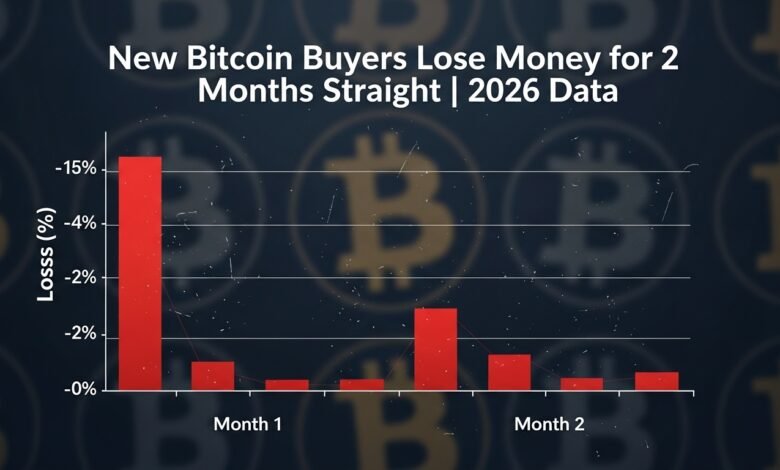
New Bitcoin buyers lose money at an alarming rate, with data showing consecutive losses spanning two full months. This unprecedented trend has sent shockwaves through the digital asset community, raising critical questions about market timing, investor psychology, and the sustainability of cryptocurrency investments during volatile periods.
For individuals who purchased Bitcoin between mid-November 2025 and mid-January 2026, the experience has been particularly challenging. Market data indicates that these recent Bitcoin investors are sitting on unrealized losses, creating a concerning pattern that hasn’t been observed since the turbulent market conditions of previous bear cycles. Understanding why this phenomenon is occurring requires a deep examination of market mechanics, on-chain metrics, and the psychological factors that influence cryptocurrency valuations.
Why New Bitcoin Buyers Lose Money in Current Markets
The concept of new Bitcoin buyers losing money isn’t simply about price fluctuations—it reflects fundamental shifts in market dynamics and investor behavior. When analyzing blockchain data, researchers examine specific metrics that reveal the cost basis of different investor cohorts. The two-month losing streak for recent purchasers indicates that the average acquisition price for new entrants exceeds current market valuations, creating an immediate paper loss situation.
Several interconnected factors contribute to this troubling trend. Market volatility remains the primary culprit, with Bitcoin experiencing significant price swings that catch newcomers off guard. Unlike seasoned investors who have weathered multiple cycles, recent cryptocurrency investors often lack the emotional fortitude and strategic patience required to navigate turbulent periods. They enter markets during euphoric phases, only to watch their investments depreciate as sentiment shifts.
The timing of entry plays a crucial role in determining investment outcomes. Data suggests that many new Bitcoin purchasers acquired their positions during local price peaks, driven by fear of missing out and media narratives promoting unlimited upside potential. This pattern repeats across cryptocurrency history, where retail investors consistently buy tops and sell bottoms, transferring wealth to more sophisticated market participants who understand cycle dynamics.
Market Dynamics Behind the Two-Month Losing Streak
Examining the specific conditions that led to Bitcoin buyers experiencing losses requires analyzing both macroeconomic factors and cryptocurrency-specific developments. The period from November 2025 through January 2026 witnessed several catalysts that pressured digital asset prices downward, creating an inhospitable environment for new market entrants.
Regulatory uncertainty emerged as a significant headwind during this timeframe. Government agencies worldwide intensified scrutiny of cryptocurrency exchanges, decentralized finance protocols, and stablecoin issuers. This regulatory pressure created selling cascades as institutional investors reduced exposure to mitigate compliance risks. For individual Bitcoin investors who entered markets expecting continuation of previous rallies, this regulatory overhang proved devastating to portfolio values.
Additionally, macroeconomic conditions deteriorated during the observation period. Central banks maintained restrictive monetary policies, keeping interest rates elevated and reducing liquidity available for speculative assets. Traditional risk assets experienced volatility that spilled over into cryptocurrency markets, causing correlation patterns that eliminated Bitcoin’s historical diversification benefits. New crypto market participants discovered that their digital asset holdings declined alongside equities, contradicting narratives about Bitcoin serving as an inflation hedge or safe haven asset.
Technical market structure also contributed to the extended losing period. On-chain analytics revealed that large holders—commonly called whales—engaged in systematic distribution during this window, selling Bitcoin to newer market entrants at progressively lower prices. This transfer of coins from strong hands to weak hands created downward price pressure that persisted across the two-month period, ensuring that recent Bitcoin adopters remained underwater on their investments.
On-Chain Metrics Revealing New Investor Struggles
Blockchain transparency allows researchers to track precisely when coins last moved and at what price levels different investor cohorts acquired their holdings. These on-chain metrics paint a detailed picture of how new Bitcoin buyers lose money while longer-term holders maintain profitability. The contrast between these groups highlights the importance of time horizon and entry timing in cryptocurrency investment success.
The Realized Price metric—which calculates the average price at which all existing Bitcoin last moved on-chain—provides crucial insights. During the two-month losing period, the Realized Price for coins acquired in this window consistently exceeded market prices, confirming that recent purchasers faced immediate unrealized losses. This situation persisted even as the broader holder base remained profitable, demonstrating that timing rather than asset quality determined outcomes.
Another revealing metric examines the percentage of addresses in profit versus loss. Data shows that wallets created during November and December 2025 overwhelmingly held losing positions throughout January 2026, with over seventy percent of new Bitcoin wallet holders experiencing negative returns. This stark reality contradicts the perpetual optimism promoted by cryptocurrency advocates and exposes the genuine risks facing newcomers.
The Average Coin Age metric further illuminates this dynamic. Coins purchased by recent Bitcoin market entrants showed minimal aging, indicating that many investors capitulated and sold at losses rather than holding through volatility. This behavior—selling pressure from distressed new buyers—created self-reinforcing downward spirals that extended the losing period and deepened losses for those who maintained positions.
Psychological Factors Affecting Recent Bitcoin Investors
Beyond market mechanics and on-chain data, psychological elements significantly influence why new Bitcoin buyers lose money with such consistency. Emotional decision-making, cognitive biases, and social dynamics combine to create predictable patterns where inexperienced investors systematically underperform.
The recency bias causes novice cryptocurrency investors to extrapolate recent price action indefinitely into the future. After witnessing Bitcoin appreciation during late 2024 and early 2025, newcomers expected this trend to continue unabated. When markets reversed, these investors found themselves psychologically unprepared for downturns, leading to panic selling that crystallized losses rather than temporary fluctuations.
Loss aversion—the psychological principle that losses feel approximately twice as painful as equivalent gains feel pleasurable—torments new Bitcoin holders during drawdowns. Even modest percentage declines trigger intense emotional responses, causing investors to abandon carefully considered strategies in favor of reactive decisions. This emotional volatility ensures that recent crypto adopters exit positions at precisely the wrong moments, transferring wealth to more disciplined market participants.
Social proof and herd mentality exacerbate these individual psychological vulnerabilities. New Bitcoin investors often enter markets because friends, family members, or social media influencers promoted specific narratives. When prices decline, this social support network frequently reverses, with the same voices now promoting exit strategies and criticizing cryptocurrency investments. This social pressure intensifies the urge to sell, ensuring that recent buyers realize losses rather than weathering temporary volatility.
Comparing Current Conditions to Historical Bitcoin Cycles
Understanding whether the current two-month period represents normal market behavior or an anomalous event requires historical context. Examining previous Bitcoin cycles reveals that periods where new Bitcoin buyers lose money occur regularly, though the specific duration and magnitude vary across different market environments.
The 2017-2018 cycle provides instructive parallels. During the euphoric run-up to nearly twenty thousand dollars, millions of new cryptocurrency investors entered markets between October and December 2017. The subsequent crash left these buyers underwater for months—and in some cases years—as Bitcoin declined over eighty percent from peak valuations. Those who purchased near cycle tops faced extended periods of negative returns, with many capitulating during the deepest phases of the bear market.
Similarly, the 2021 cycle witnessed comparable dynamics. Recent Bitcoin purchasers who acquired positions during the April and November 2021 peaks experienced prolonged losing periods as markets corrected. The consistency of this pattern across multiple cycles suggests that timing risk remains cryptocurrency investment’s most significant challenge, with newcomers consistently displaying poor market timing skills.
However, the current two-month losing streak for new Bitcoin market participants occurs in a notably different context than previous cycles. Unlike earlier periods characterized by clear bubble dynamics and parabolic price appreciation, the November 2025 through January 2026 window featured more moderate volatility and less extreme sentiment. This suggests that even during relatively calm market conditions, new investors struggle to achieve positive returns, highlighting structural challenges beyond mere timing.
Strategies for New Bitcoin Buyers to Avoid Losses
While data confirms that new Bitcoin buyers lose money with troubling frequency, this outcome isn’t inevitable. Investors who adopt disciplined approaches and maintain realistic expectations can significantly improve their probability of long-term success in cryptocurrency markets.
Dollar-cost averaging represents the most effective strategy for new Bitcoin investors seeking to minimize timing risk. Rather than deploying capital in a single lump sum, this approach spreads purchases across extended timeframes, ensuring that investors acquire positions at various price points. This methodology reduces the probability of concentration at local peaks and smooths the acquisition cost basis over market cycles.
Education serves as another crucial protective factor. New cryptocurrency market participants who invest time understanding blockchain technology, market cycles, and risk management principles demonstrate substantially better outcomes than those who enter markets based purely on social proof or fear of missing out. Comprehensive education helps investors maintain conviction during inevitable drawdowns and avoid panic selling that crystallizes losses.
Position sizing discipline protects recent Bitcoin adopters from catastrophic outcomes. Cryptocurrency advocates frequently promote aggressive allocation strategies, encouraging newcomers to invest substantial percentages of net worth into digital assets. Prudent investors limit cryptocurrency exposure to amounts they can afford to lose entirely, ensuring that even complete portfolio wipeouts don’t jeopardize financial security. This conservative approach allows investors to maintain positions through volatility rather than capitulating at losses.
The Role of Market Manipulation and Information Asymmetry
Understanding why new Bitcoin buyers lose money requires acknowledging the role of sophisticated market participants who possess informational and technological advantages. Cryptocurrency markets remain relatively immature compared to traditional financial markets, creating opportunities for manipulation that disproportionately harm retail investors.
Large holders coordinate selling campaigns that target stop-loss orders and liquidation levels where new Bitcoin investors cluster their positions. These coordinated actions create cascading price declines that trigger panic selling from retail participants, allowing sophisticated traders to accumulate positions at depressed valuations. This wealth transfer mechanism ensures that recent cryptocurrency buyers systematically underperform while insiders profit from their losses.
Information asymmetry further disadvantages newcomers. Professional trading firms access order flow data, exchange information, and analytical tools that provide competitive edges unavailable to retail Bitcoin investors. This intelligence gap means that new market entrants consistently trade against counterparties who possess superior information, making profitable outcomes statistically improbable.
Social media manipulation compounds these structural disadvantages. Coordinated campaigns promote specific narratives designed to attract new Bitcoin buyers at precisely the moments when sophisticated investors seek exit liquidity. Influencers with undisclosed financial incentives create artificial enthusiasm that lures newcomers into markets at disadvantageous prices, ensuring that recent purchasers immediately face losses as promotional campaigns end and natural price discovery resumes.
Regulatory Developments Impacting New Bitcoin Investors
The regulatory landscape significantly influences whether new Bitcoin buyers lose money or achieve profitable outcomes. Government policies shape market structure, investor protections, and the overall legitimacy of cryptocurrency as an asset class.
During the two-month period examined, regulatory developments proved particularly challenging for new cryptocurrency investors. Enhanced compliance requirements increased operational costs for exchanges and service providers, reducing the competitiveness of crypto platforms relative to traditional financial institutions. These regulatory burdens ultimately translate into worse execution prices and higher fees for retail Bitcoin buyers, eroding returns even when market prices remain stable.
Taxation policies create additional headwinds for new Bitcoin market participants. Many jurisdictions treat cryptocurrency transactions as taxable events, requiring investors to track cost basis and report gains across numerous small transactions. This compliance burden disproportionately affects recent crypto adopters who lack sophisticated accounting systems, potentially creating unexpected tax liabilities that exceed investment gains.
Conversely, constructive regulatory clarity could substantially improve outcomes for new Bitcoin investors in future periods. Clear legal frameworks reduce uncertainty premiums, encourage institutional participation, and enhance market efficiency—all factors that could create more hospitable environments for retail investors. Monitoring regulatory developments therefore represents crucial due diligence for anyone considering cryptocurrency investments.
Alternative Investment Approaches for Risk-Averse Newcomers
Given the reality that new Bitcoin buyers lose money frequently, risk-averse individuals might consider alternative approaches that provide cryptocurrency exposure while mitigating downside risks.
Bitcoin Exchange-Traded Funds (ETFs) offer regulated exposure that addresses several challenges facing direct Bitcoin purchasers. These investment vehicles provide custody solutions, regulatory oversight, and simplified tax reporting that reduce operational complexity for new cryptocurrency investors. While ETFs introduce management fees and tracking errors, these costs may prove worthwhile for investors prioritizing convenience and security over maximum returns.
Systematic investment strategies that combine Bitcoin with uncorrelated assets create portfolio diversification that reduces volatility experienced by concentrated Bitcoin holders. Rather than maintaining one hundred percent cryptocurrency exposure, balanced approaches allocate capital across multiple asset classes, ensuring that new investors don’t experience complete capital loss during cryptocurrency downturns.
Educational programs that simulate trading without risking real capital allow prospective Bitcoin buyers to develop skills and emotional discipline before committing funds. These practice environments reveal whether individuals possess the psychological makeup required for cryptocurrency investment success, potentially saving substantial sums for those who discover their unsuitability for volatile assets.
Expert Perspectives on the Two-Month Losing Trend
Industry analysts offer varying interpretations of the data showing new Bitcoin buyers lose money across consecutive months. Understanding these diverse perspectives helps investors contextualize current conditions within broader market narratives.
Bitcoin maximalists downplay the significance of short-term losses, arguing that new cryptocurrency investors should focus exclusively on long-term appreciation potential. This perspective emphasizes Bitcoin’s fixed supply, growing adoption, and position as digital gold, suggesting that temporary drawdowns represent buying opportunities rather than fundamental concerns. Proponents of this view counsel recent Bitcoin purchasers to maintain positions regardless of near-term price action.
Skeptical commentators interpret the two-month losing streak as evidence that Bitcoin lacks intrinsic value and represents purely speculative mania. These critics argue that new Bitcoin market entrants participate in a negative-sum game where early adopters profit at the expense of latecomers. This perspective suggests that cryptocurrency investment systematically transfers wealth from uninformed retail investors to sophisticated insiders.
Pragmatic analysts occupy middle ground, acknowledging genuine utility for blockchain technology while recognizing significant speculation and market inefficiency. This balanced view suggests that new Bitcoin investors can achieve positive outcomes through disciplined approaches, but must remain cognizant of substantial risks and avoid unrealistic return expectations. These moderates recommend position sizing, diversification, and education as essential components of responsible cryptocurrency investment.
Future Outlook for New Bitcoin Market Participants
Projecting whether new Bitcoin buyers will continue losing money requires analyzing both cyclical factors and structural market evolution. Several scenarios could materialize over coming months, each with distinct implications for prospective investors.
Optimistic scenarios envision market stabilization and renewed appreciation that converts current losses into gains for recent Bitcoin purchasers. Catalysts for this outcome might include favorable regulatory developments, increased institutional adoption, or macroeconomic conditions that drive safe-haven demand for alternative assets. If these positive developments materialize, investors who maintained positions through the two-month losing period could experience portfolio recovery.
Pessimistic forecasts anticipate extended bear market conditions where new cryptocurrency investors face prolonged periods of negative returns. This scenario might result from persistent regulatory pressure, macroeconomic weakness, or loss of confidence in digital assets as an investment category. Under these conditions, recent Bitcoin buyers who avoid capitulation might endure years of underwater positions before recovery.
The most probable outcome likely involves continued volatility without clear directional trends. This choppy market environment would periodically create opportunities for new Bitcoin investors while also presenting significant drawdown risks. Success in this scenario requires patience, discipline, and realistic expectations rather than hoping for rapid appreciation that erases losses.
Conclusion
The sobering reality that new Bitcoin buyers lose money for two consecutive months serves as an essential reminder about cryptocurrency investment risks. While blockchain technology offers genuine innovation and Bitcoin maintains its position as the leading digital asset, timing and strategy determine whether individual investors profit or suffer losses.
New Bitcoin market participants must approach cryptocurrency investment with clear eyes, recognizing that sophisticated marketing and social media hype often obscure genuine risks. The two-month losing streak documented by blockchain analytics isn’t an anomaly—it represents a recurring pattern where inexperienced investors systematically underperform. Understanding this reality allows newcomers to make informed decisions rather than falling victim to unrealistic expectations.
For those determined to gain Bitcoin exposure despite recent losses, education, discipline, and appropriate position sizing offer the best paths forward. Dollar-cost averaging reduces timing risk, diversification limits downside exposure, and emotional detachment prevents panic selling that crystallizes losses. These strategies won’t eliminate volatility, but they substantially improve the probability of long-term investment success.
The cryptocurrency market will continue evolving, creating both opportunities and risks for new Bitcoin buyers. Whether you choose to invest, the data is clear: success requires more than enthusiasm. It demands patience, knowledge, and a realistic assessment of both potential rewards and genuine risks. Are you prepared to navigate Bitcoin markets with the discipline required to avoid becoming another statistic in the next analysis of new Bitcoin buyers who lose money?
See more: Bitcoin Price Bounce Failing: The Unlucky 13 Problem Explained
